Maybe the Best Place for a Royal Oak Is a Bugatti Dashboard
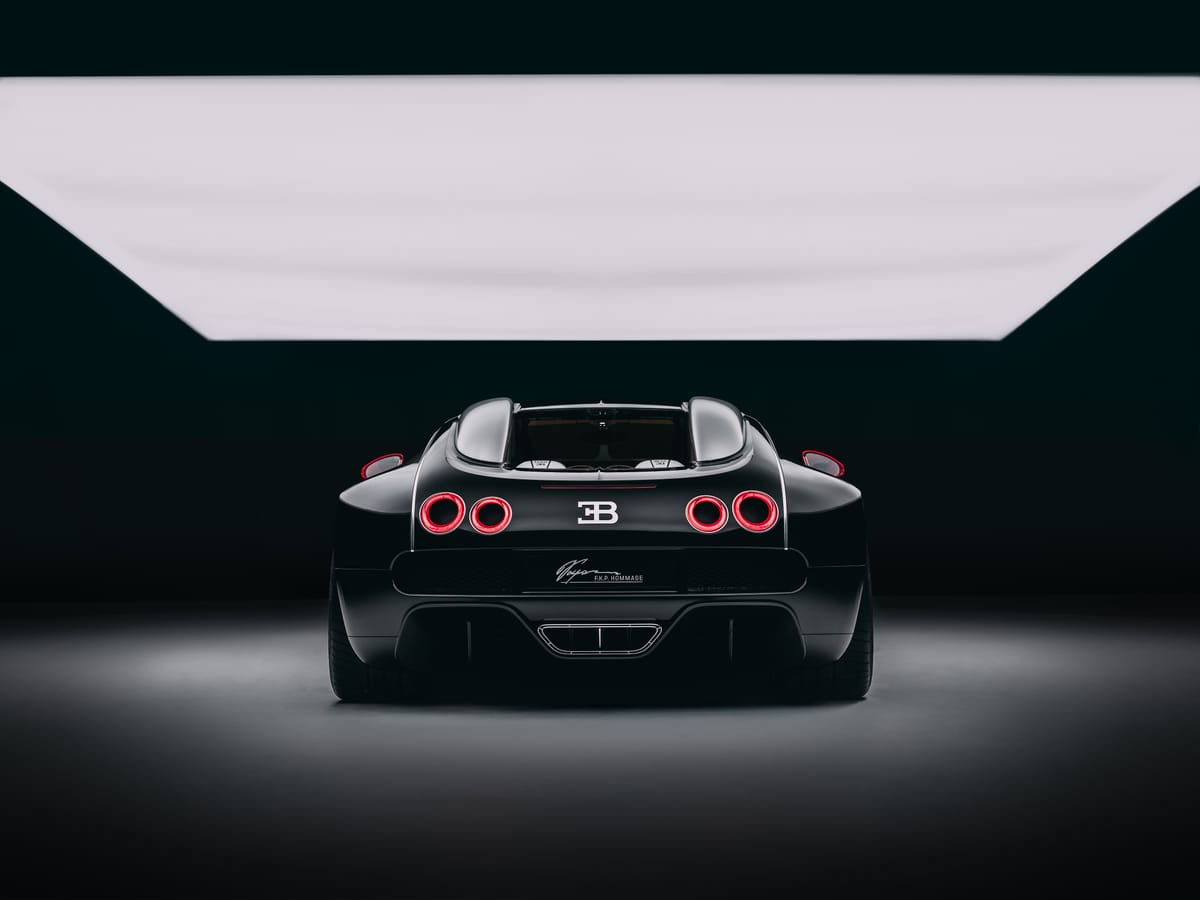
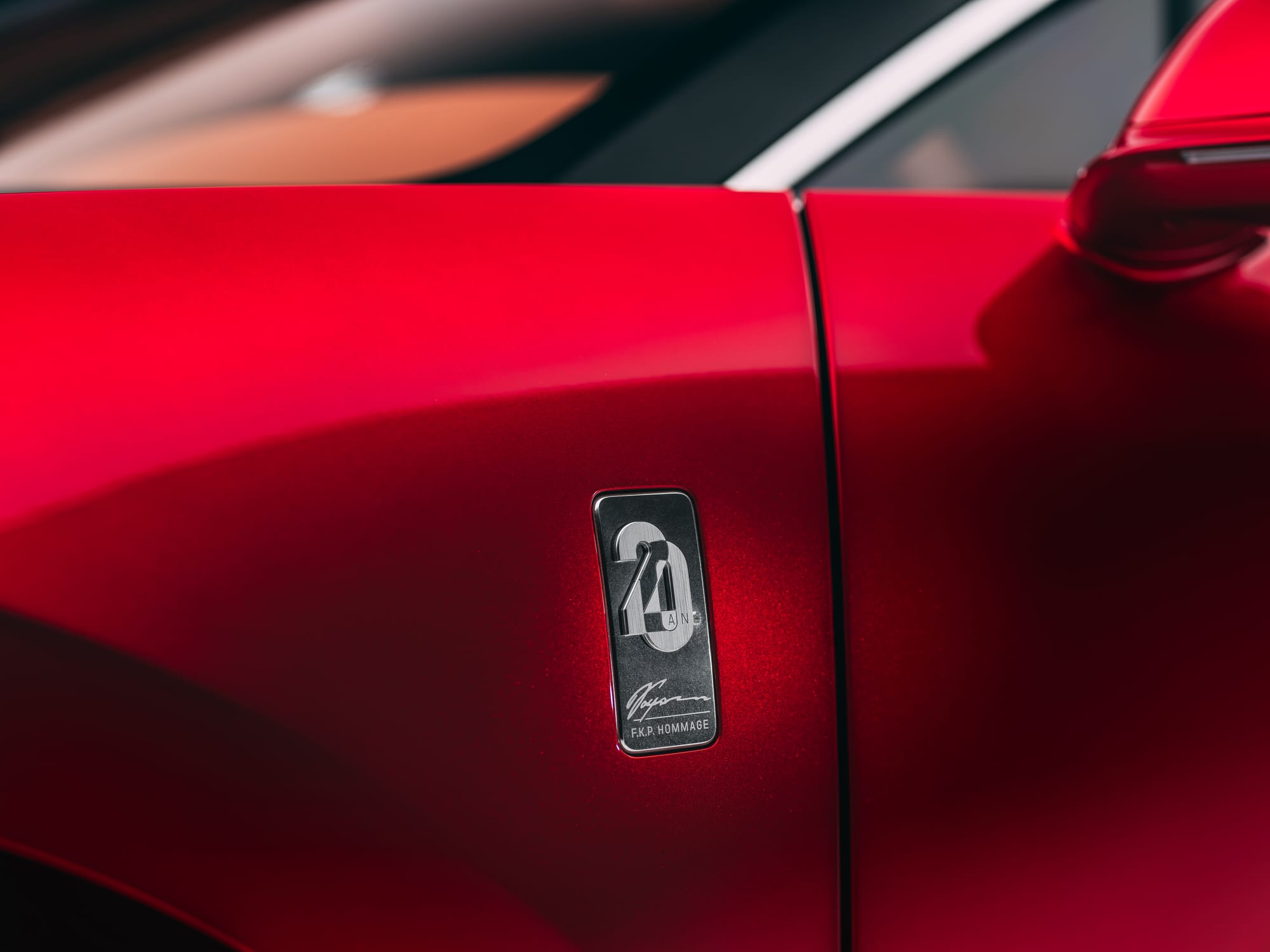
Royal Oak in the Bugatti dashboard sounds like a Gunna lyric. Something Travis Scott might mumble right before an echo of “It’s lit” drifts into the background. That kind of flex feels appropriate here, because the Bugatti F.K.P. Hommage is not subtle. It is a 1,578-horsepower tribute to the Veyron, built as a one-off, for someone who already knows exactly what they want.
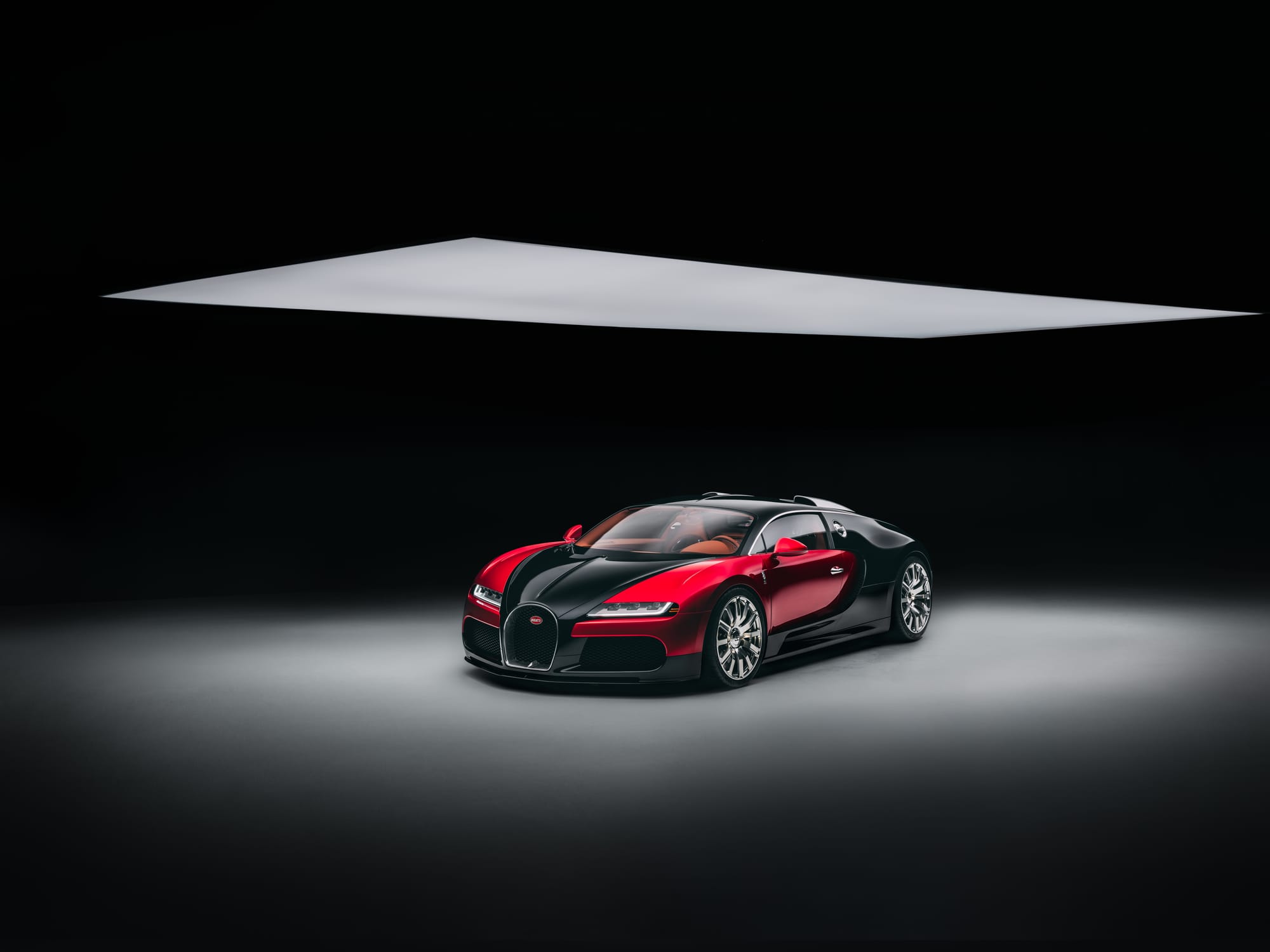
The F.K.P. Hommage arrives cloaked in a two-tone red and black body, a detail that matters later. While Bugatti hasn’t published full performance figures, the car sits on the Chiron Super Sport platform and carries the most evolved version of the W16 engine.
That means 500-plus horsepower more than the original Veyron’s already-unthinkable 1,001 hp. The numbers are absurd, but that was always the point.
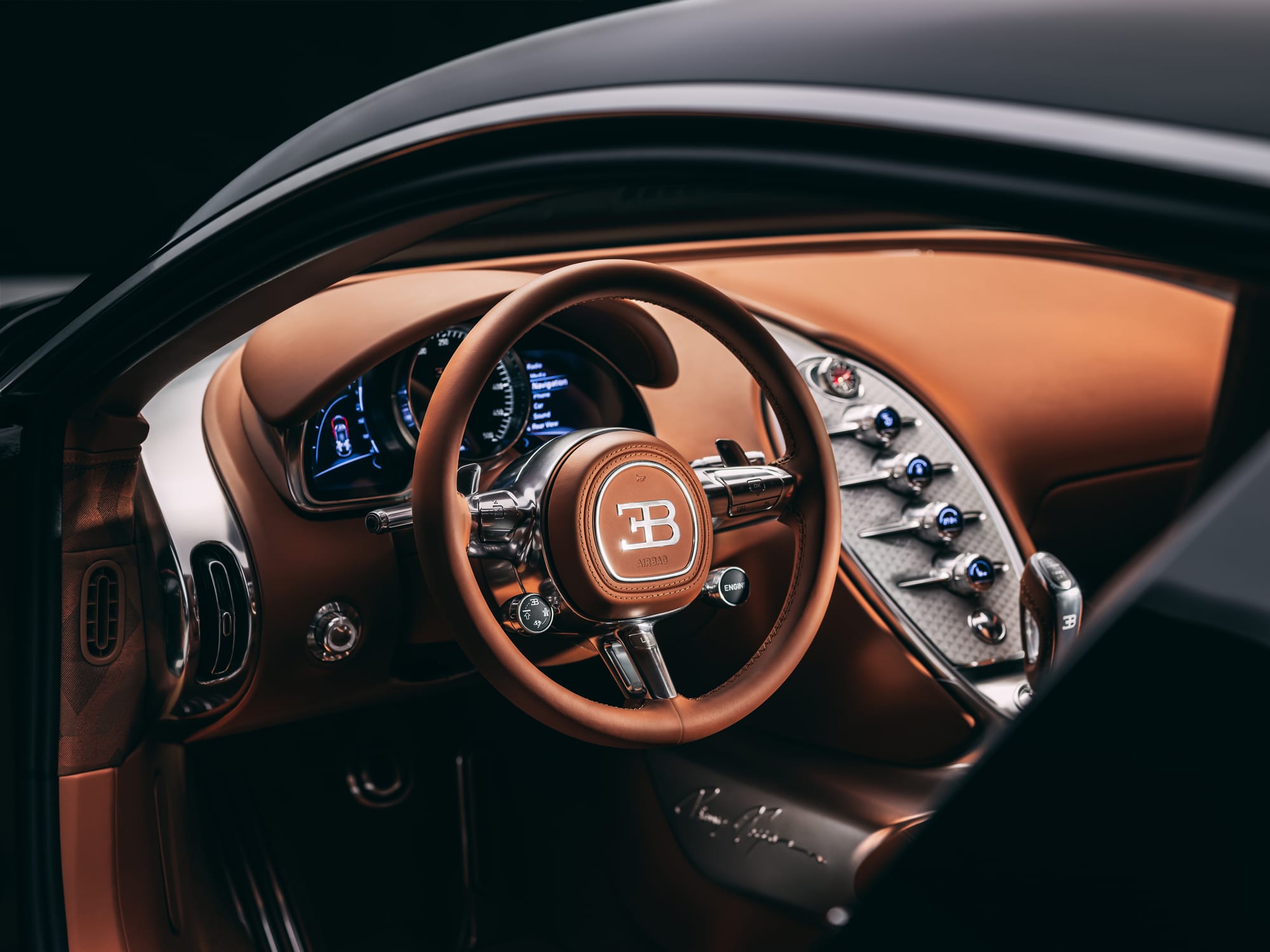
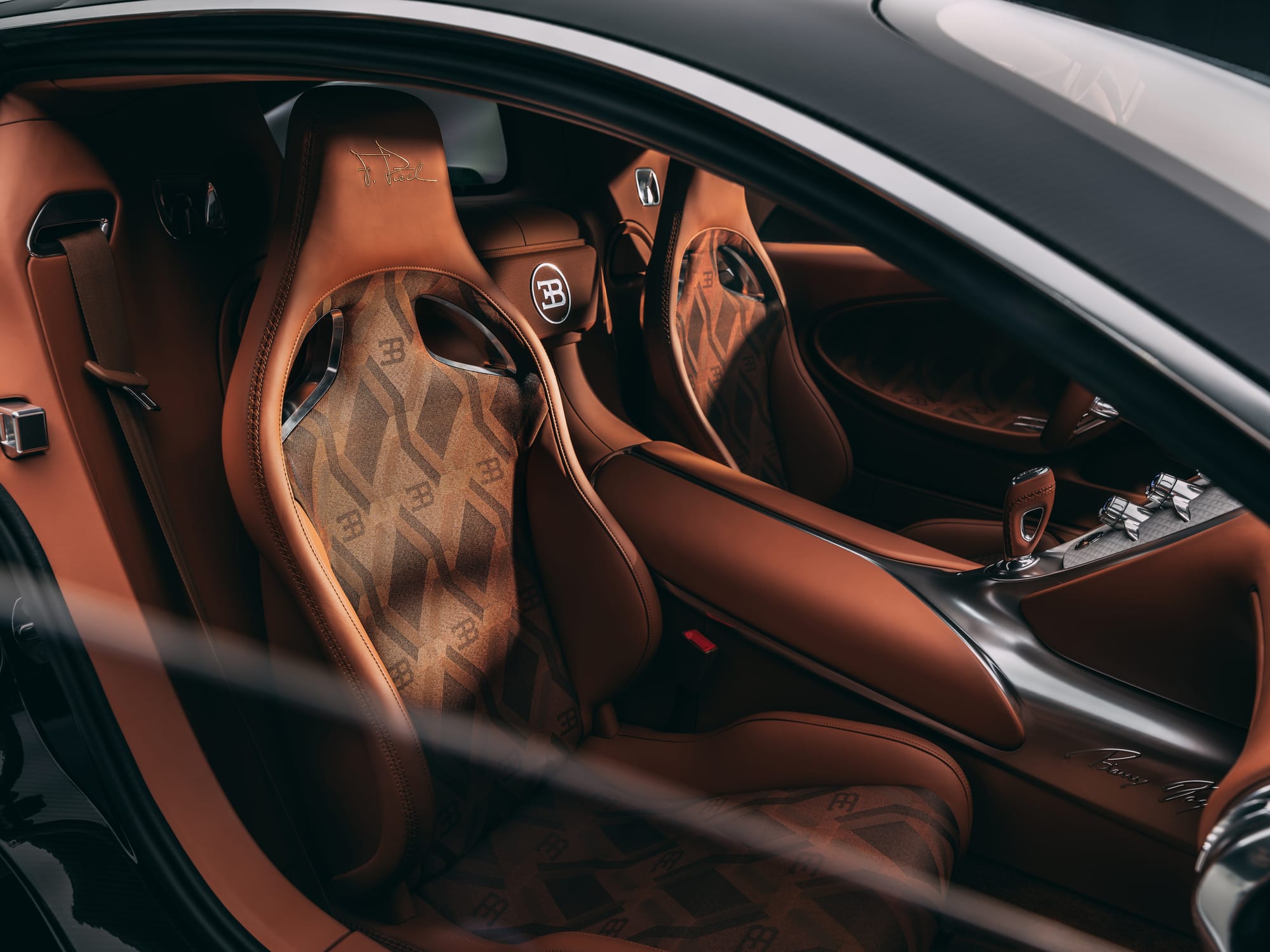
The interior leans closer to the Chiron than the Veyron, retaining the modern instrument cluster while introducing a bespoke steering wheel and a wider, reworked center console. Materials are obsessive.
Custom-woven fabrics sourced from Paris sit alongside machined aluminum and sculpted leather. It feels designed rather than decorated, which is where Bugatti tends to separate itself.
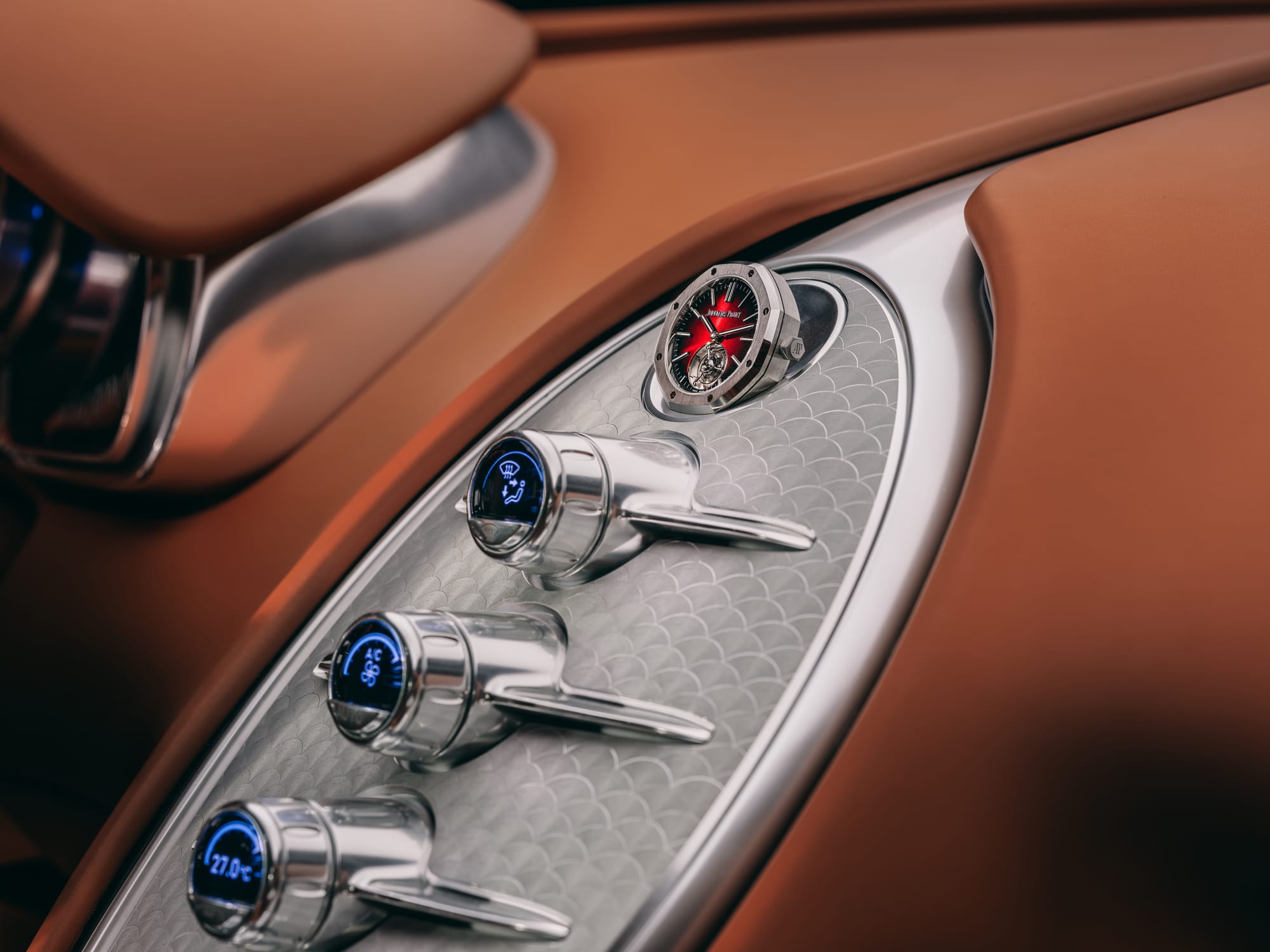
At the center of it all sits the real surprise: a one-off Audemars Piguet Royal Oak Tourbillon clock, fully integrated into the dashboard. Sized at 41mm, the octagonal case mirrors the car’s exterior color split and rests inside a rotating gondola finished with engine-turned detailing.
There’s no electrical connection between watch and car. The mechanism winds itself through motion alone, rotating several times per hour. It is watchmaking behaving exactly as watchmaking should, even when embedded inside a hypercar.
Before the Veyron, supercars still pretended to live in reality. They were aspirational and dramatic, but bounded by what engineers believed was reasonable. The Veyron arrived and removed that ceiling.
One thousand horsepower. Four hundred kilometers per hour. Air conditioning on. As a production car you could insure and drive to dinner. That shift didn’t just reset performance benchmarks, it reset ambition.
The car exists because of Ferdinand Karl Piëch, then chairman of the Volkswagen Group, whose fixation on the W16 engine made Bugatti’s modern resurrection possible. The F.K.P. Hommage takes its name directly from him, and the tribute is literal. This is not nostalgia. It is continuation.
Bugatti has flirted with horology before, most notably through its long-running partnership with Jacob & Co. The Bugatti Tourbillon watch made sense because car culture and watch culture have always overlapped.
Daytona. Carrera. Matching a watch to a car purchase. But this feels different. Instead of turning a car into a watch, Bugatti placed a watch inside the car and let it exist on its own terms.
There’s only one lingering thought for the single person who will own this. What if you could unclip that Royal Oak from the dashboard and wear it on your wrist?
Just saying.