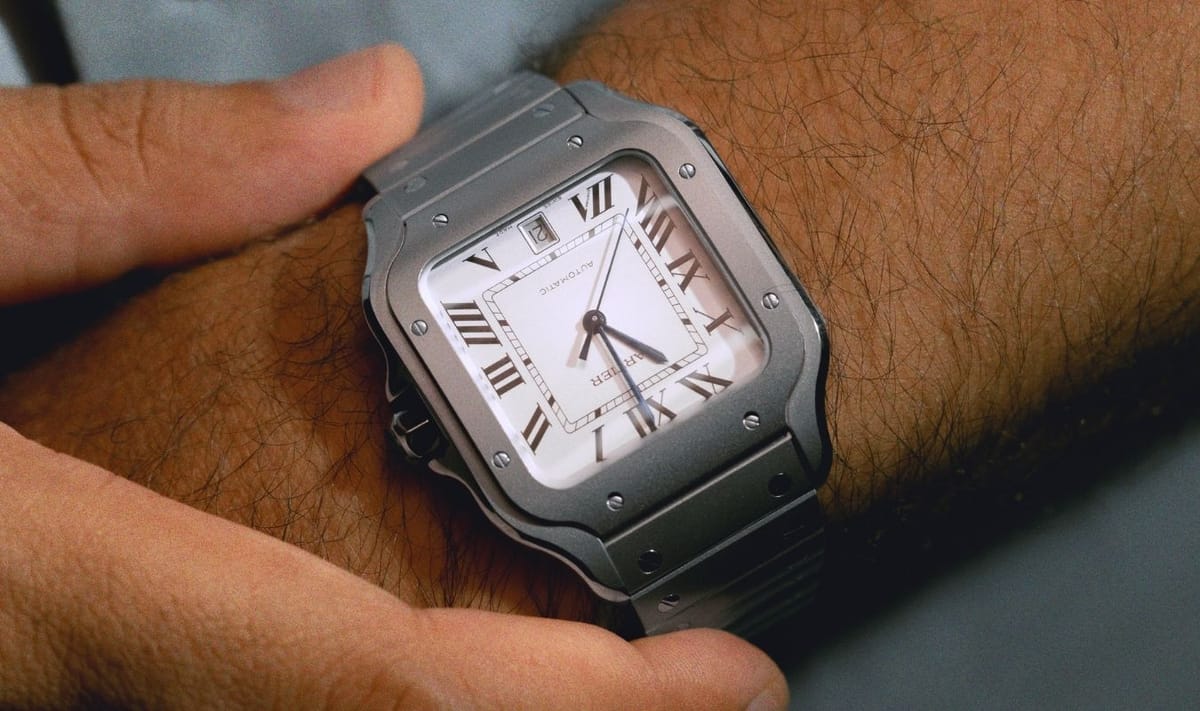
What Titanium Does to the Santos (And What It Doesn’t)
Cartier is known the world over as a high jewelry house, but every so often they remind us they are also one of the most influential watchmakers alive. The Tank gets most of the shine, but it has never stood alone. Cartier’s history is full of shaped watches that feel more like architecture than accessories.
And then there is the Santos.
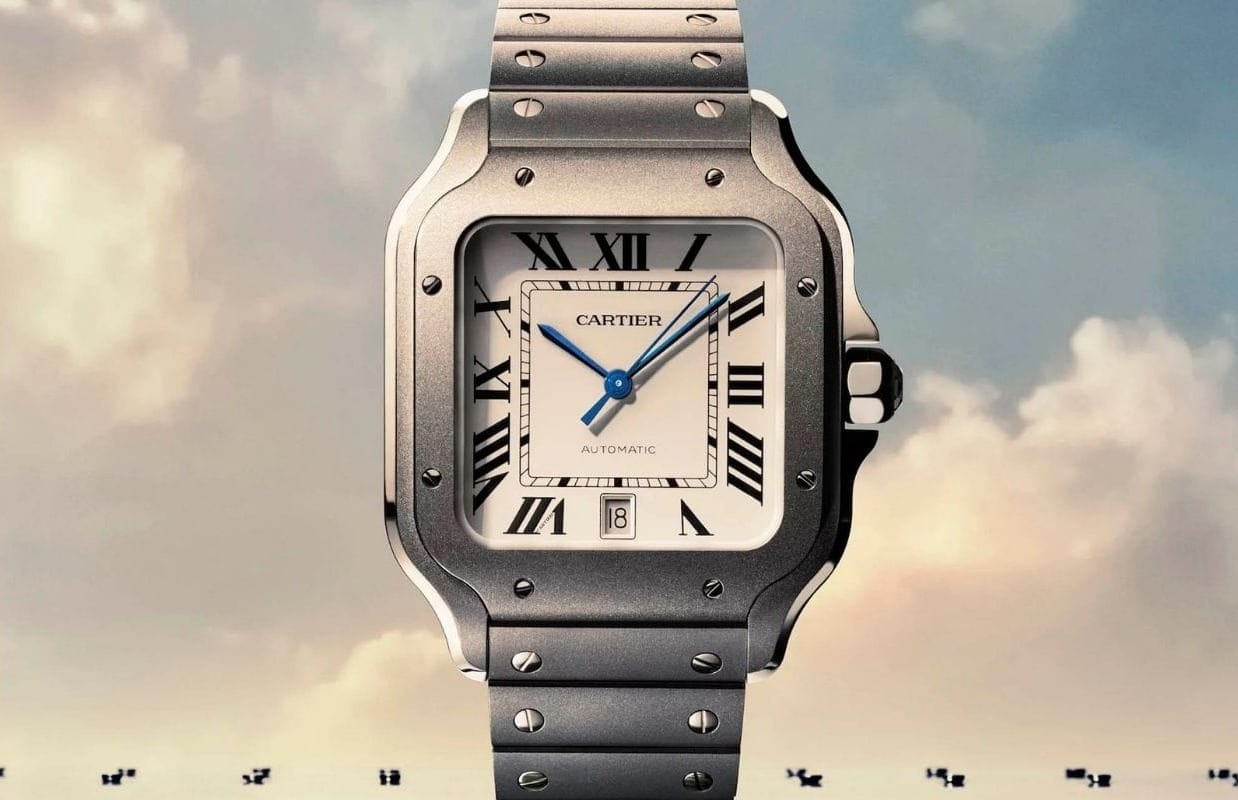
Created in 1904 for aviator Alberto Santos-Dumont, the Santos has always been a study in duality. Built for flight, elegant enough for dinner, and designed with a clarity that still feels modern more than a century later. Which is why the newest titanium Santos de Cartier, introduced this past fall, feels like a natural extension of that legacy. It carries the original spirit into something lighter, quieter, and surprisingly versatile.
I experienced the watch early when Cartier invited me to try it on in a quiet room before the release. The moment felt less like a preview and more like an initiation into the wider Cartier community. Seeing a watch before the world does changes your connection to it. You feel the intention behind it.


The first thing you notice is the texture. The bead-blasted Grade 5 titanium case and bracelet have a silky, almost powdered feel that steel cannot mimic. Your fingers do not slide across the surface. They glide, catching the soft grain in a way that stays with you.
The proportions remain classic Santos. About 39.8 millimeters across, slim at 9.38 millimeters, unmistakably Cartier in its curves and bevels. The full titanium build brings the weight below 100 grams, which gives the watch an ease that feels purposeful. Light enough for the daily grind, sculptural enough for black tie.
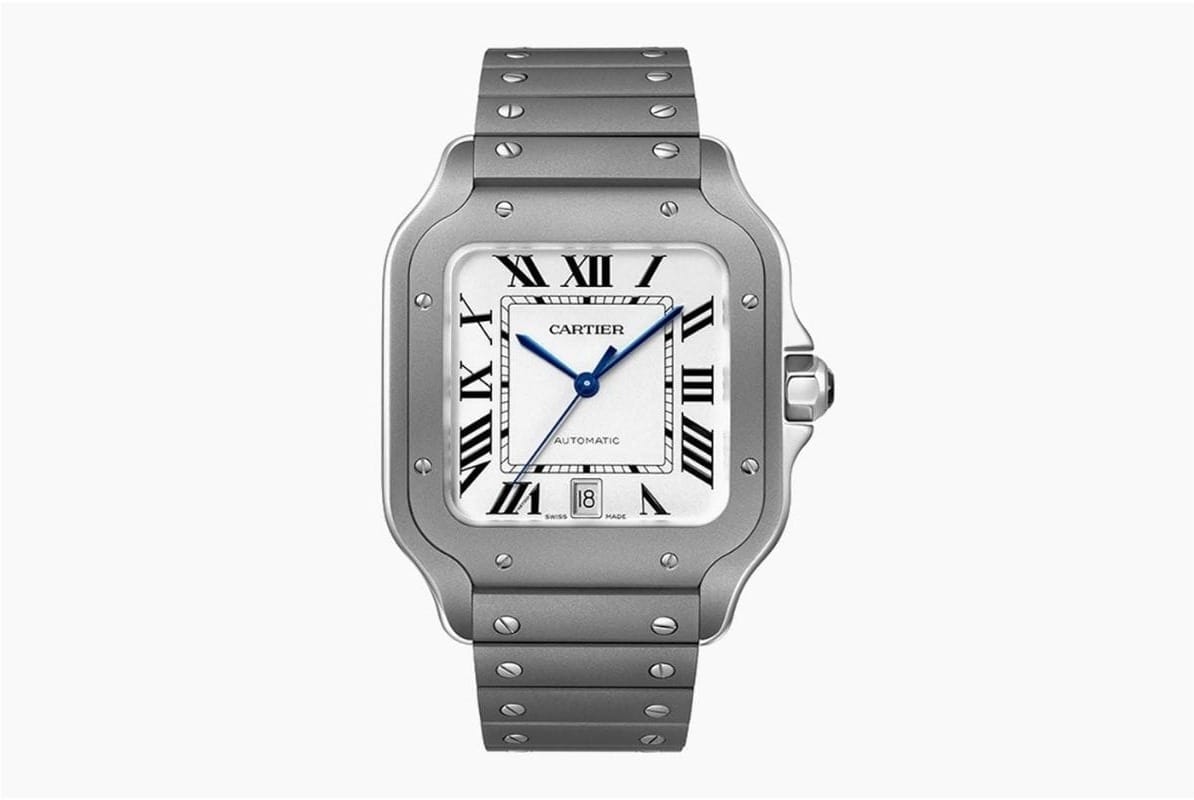
There is a jeans and T-shirt familiarity to it that never dilutes Cartier’s architectural polish. This is not a radical reinvention, but it shows how quietly Cartier can shift the mood of a classic without compromising its identity. Steel feels crisp. Precious metals feel ceremonial. Titanium feels lived-in.
People still debate whether the Santos is a true sports watch. I get it. The meaning of sport has drifted far from Santos-Dumont’s era, when sport meant leisure, exploration, and elegance in motion. Today it is a language of utility and durability. In that sense, titanium makes the Santos feel even more relevant. Especially when titanium itself lives in a grey area of luxury. Not precious. Not traditional. Full of character.
That tension is exactly why it works. Cartier has never defined luxury through weight or scarcity. Their watchmaking has always been a curatorial study of shape, line, and intention. The Santos is one of their clearest canvases. So the real question is not whether titanium is luxurious. It is whether luxury can be defined by how something makes you feel.
To me, luxury is an experience. It is emotional clarity. It is the moment an object becomes a companion. If that instinct is what moved Louis Cartier to create the first Santos, then titanium feels right for this era. It serves the same purpose with a new material language.
So yes, titanium can be a luxury material. It becomes one the moment Cartier decides to use it.