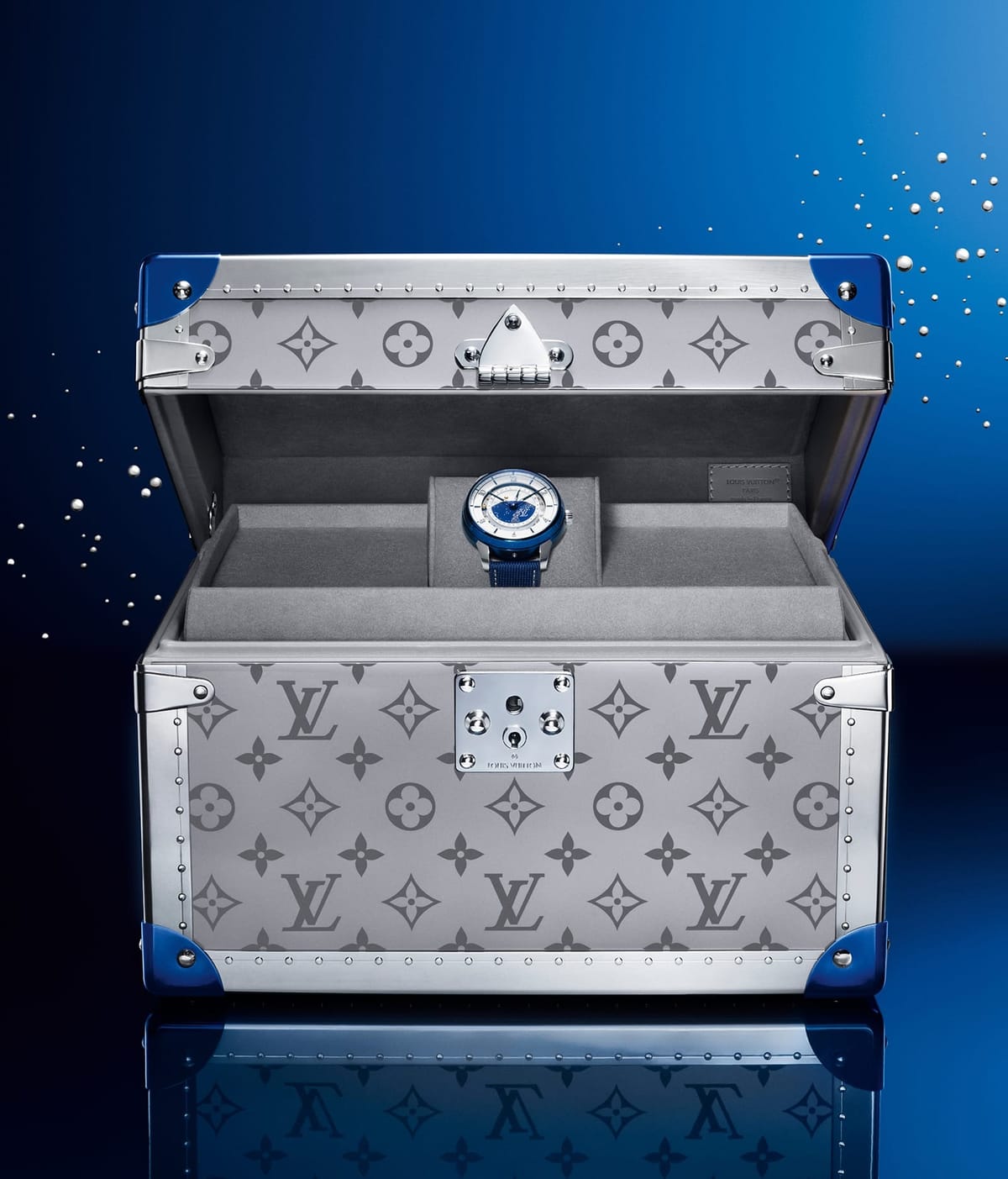
Louis Vuitton x De Bethune Is How You Fashionably Flex Watchmaking
Yes, it’s good. Technically absurd, beautifully executed, and anchored in the kind of horological engineering that gives you something to wear on your wrist and something that can only be described as “horology art,” for the watch inclined. But before you start salivating, it’s worth stating this plainly: the Louis Vuitton x De Bethune LVDB-03 project lives squarely in seven-figure territory. That matters, just not in the way price usually does.
Start with the watch. On paper, it reads like what would happen if a Louis Vuitton Tambour and a De Bethune spent a long summer together somewhere along the Côte d’Azur. The case is LV’s Tambour-Taiko form, 45mm across, rendered in titanium, finished and assembled at La Fabrique du Temps before being sent to De Bethune for Denis Flageollet’s signature thermal bluing.
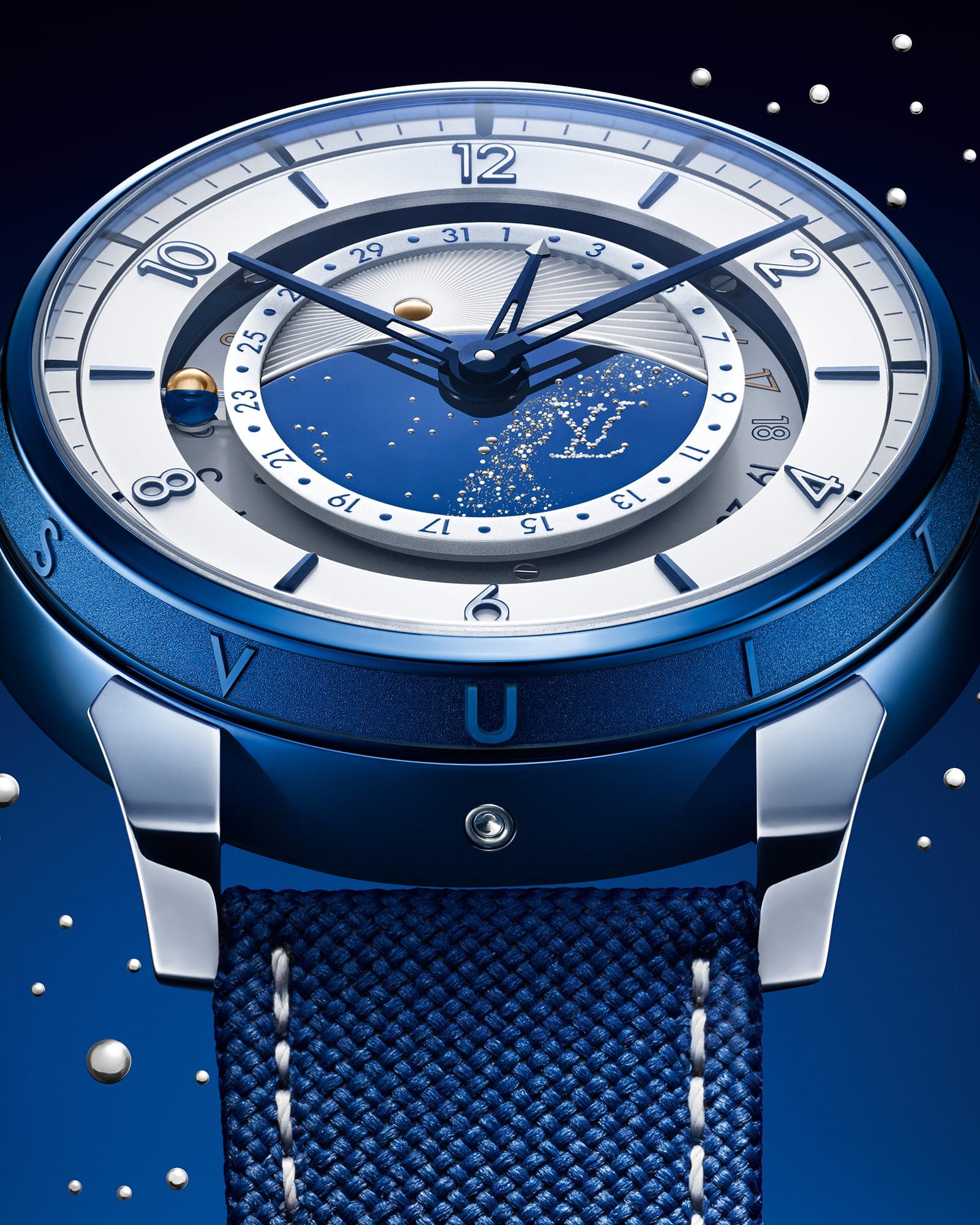
The result lands where it should: unmistakably De Bethune in color and surface treatment, unmistakably LV in silhouette.
The details reinforce that balance. The platinum crown carries Louis Vuitton’s monogram flower, but it isn’t decorative for decoration’s sake. It’s the mechanical interface between the watch and what comes next.
The dial is classic De Bethune: a blued titanium sky scattered with gold pins and gold leaf, mapping a Milky Way constellation that quietly folds an “LV” into the stars if you know where to look. Around it, a spherical day-night indicator rotates continuously, a reminder that this watch is operating on a different register than most travel watches.
This is the third chapter in Louis Vuitton’s ongoing series of collaborations with independent watchmakers, following projects with Rexhep Rexhepi and Kari Voutilainen. By now, the pattern is established.
LV isn’t experimenting. It’s using its scale to give singular watchmakers the space to pursue ideas that would be difficult, if not impossible, to realize elsewhere.
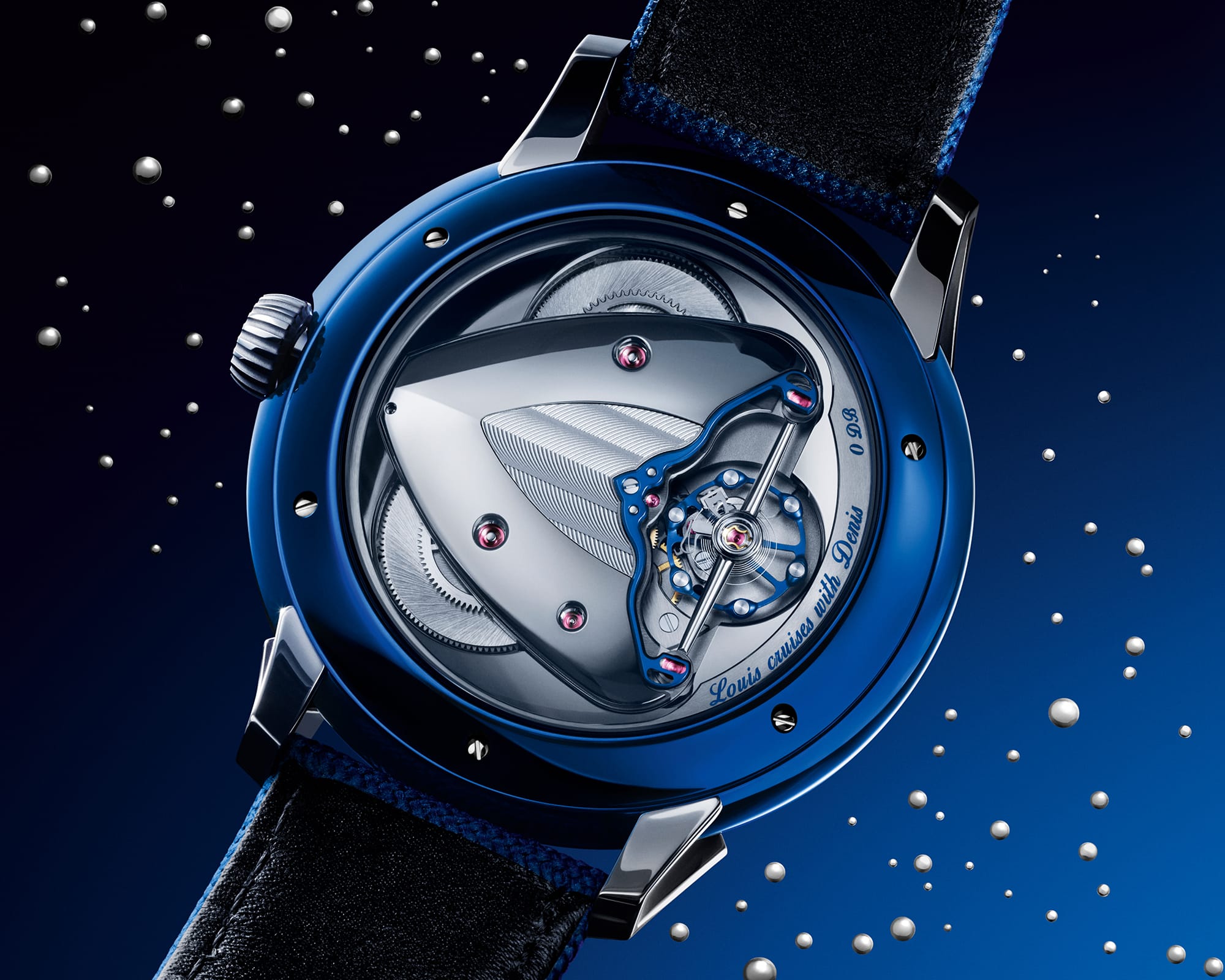
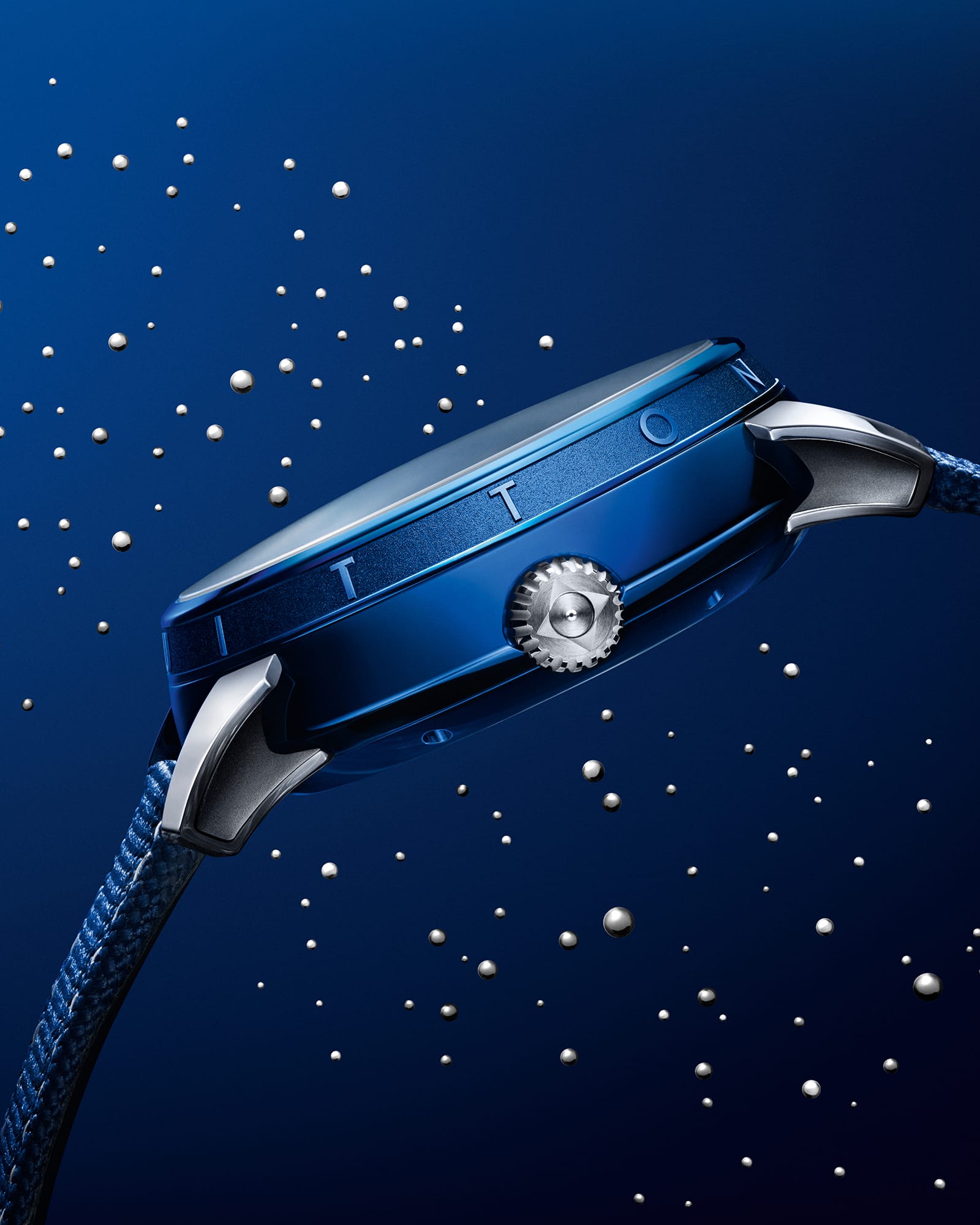
That context matters because De Bethune has never been a brand built for consensus. It’s the watch your watch friend’s friend loves. A deep-cut independent whose floating lugs, star-field dials, and ultra-polished titanium cases form a visual language that’s instantly recognizable and entirely unapologetic.
De Bethune doesn’t refine existing codes or iterate toward familiarity. The brand creates its own and trusts collectors to catch up.
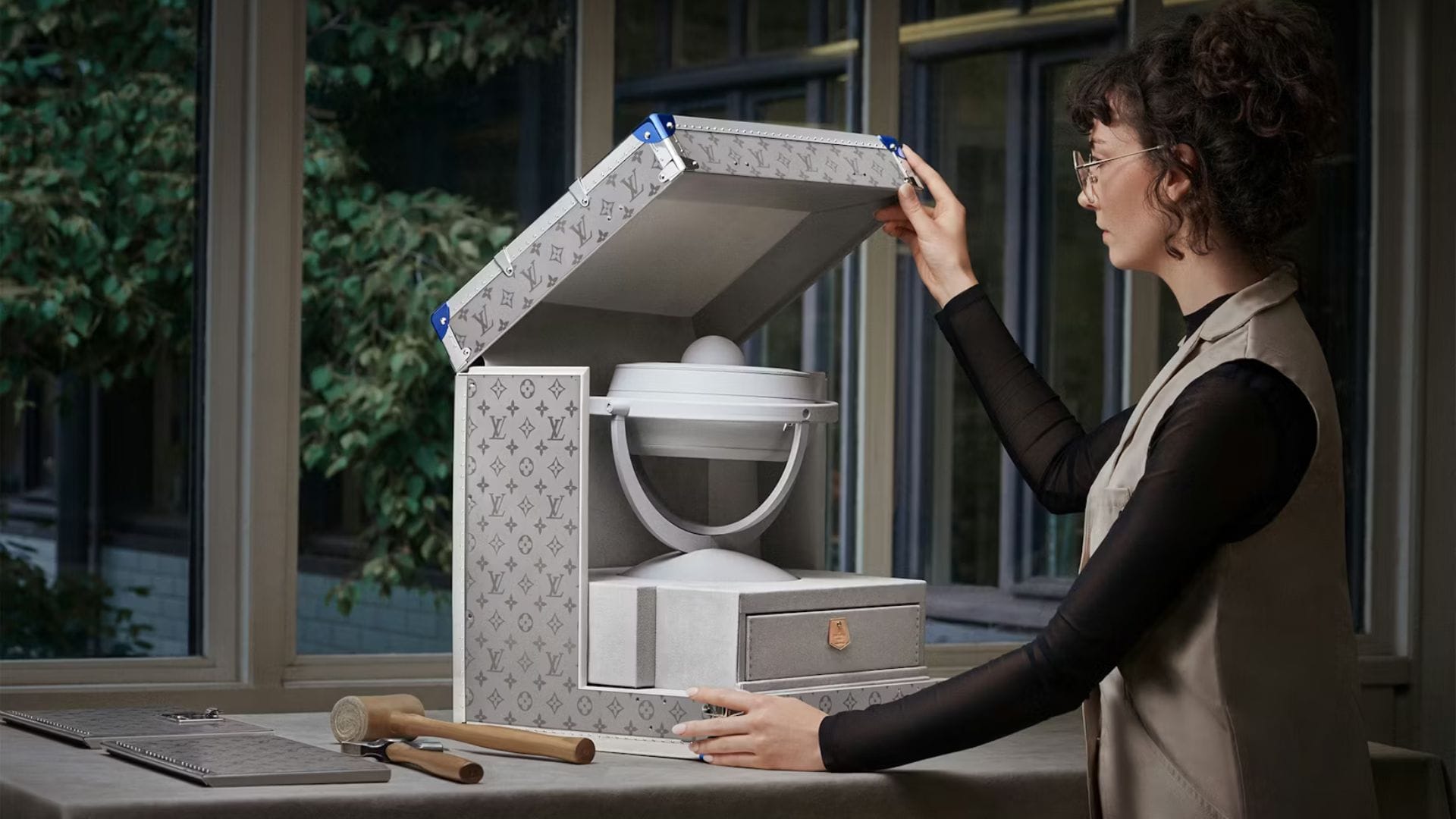
Then there’s the second half of the project, where this collaboration moves from impressive into genuinely strange, in the best possible way.
Alongside the watch sits the LVDB-03 Sympathique Louis Varius, a fully mechanical master clock designed to wind and set the wristwatch placed into it, without electronics and without shortcuts. The clock sets the time. The watch follows.
Only two of these clocks will ever exist, each paired with a corresponding wristwatch. Ten additional watches will be sold on their own, bringing total production to just twelve pieces.
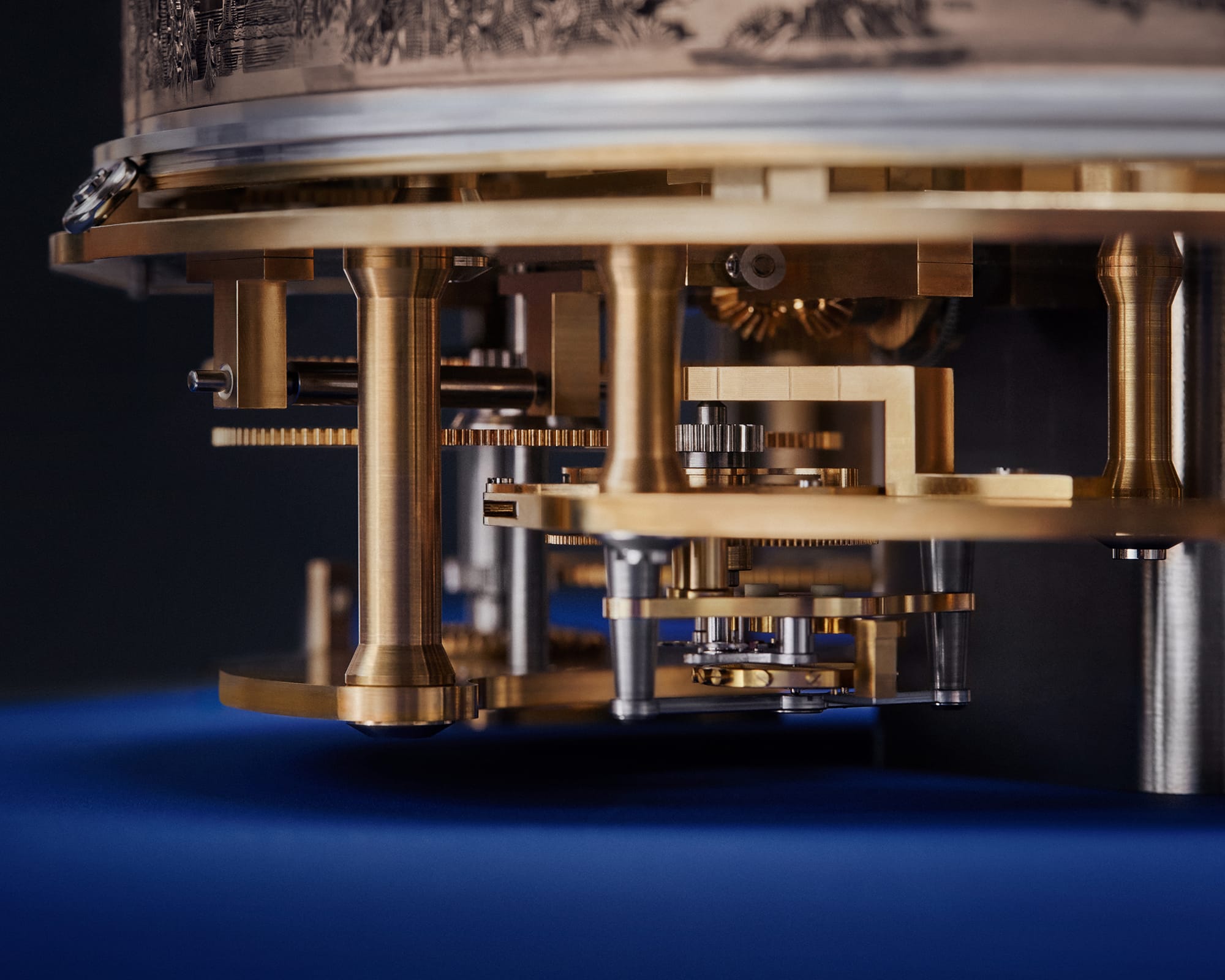
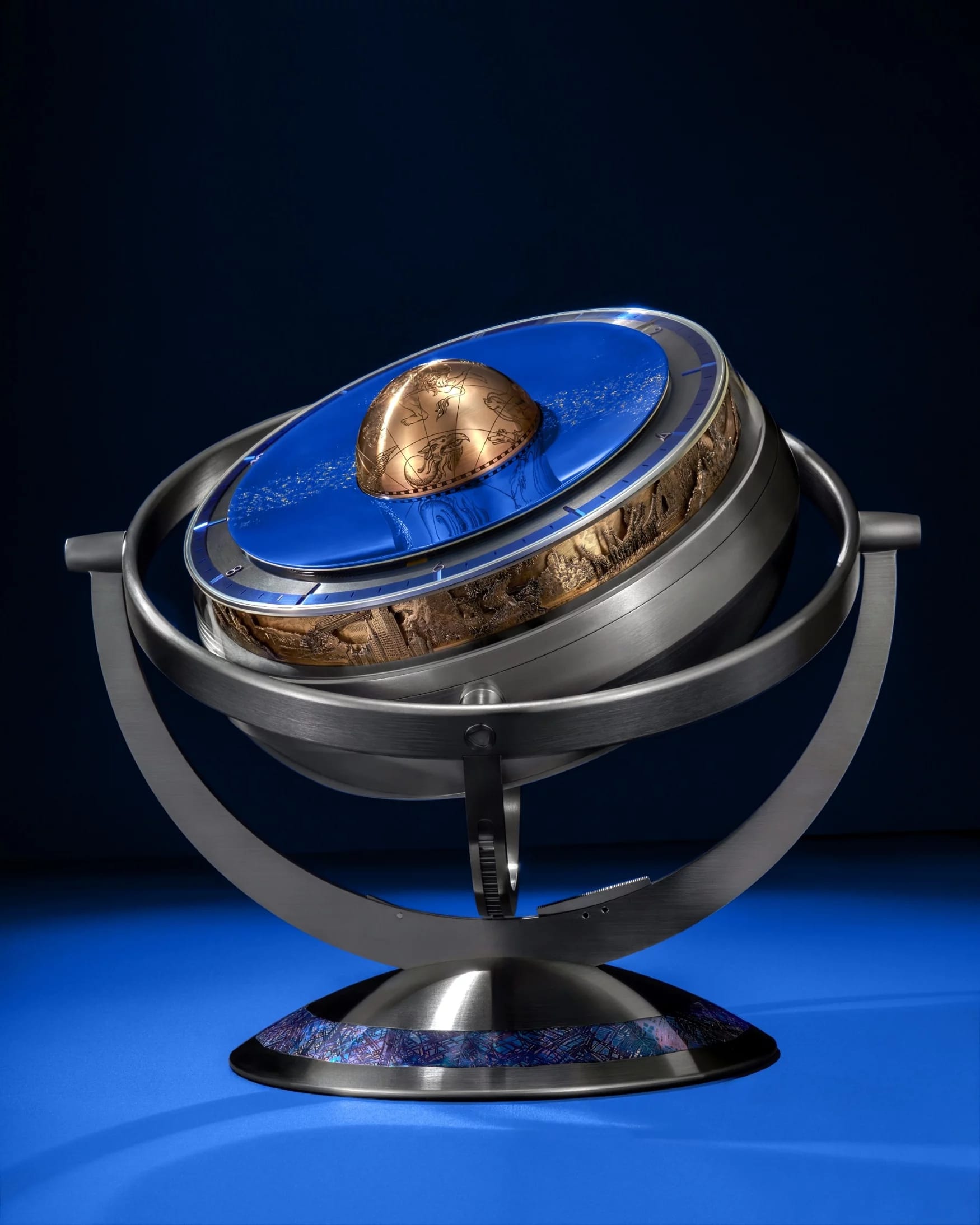
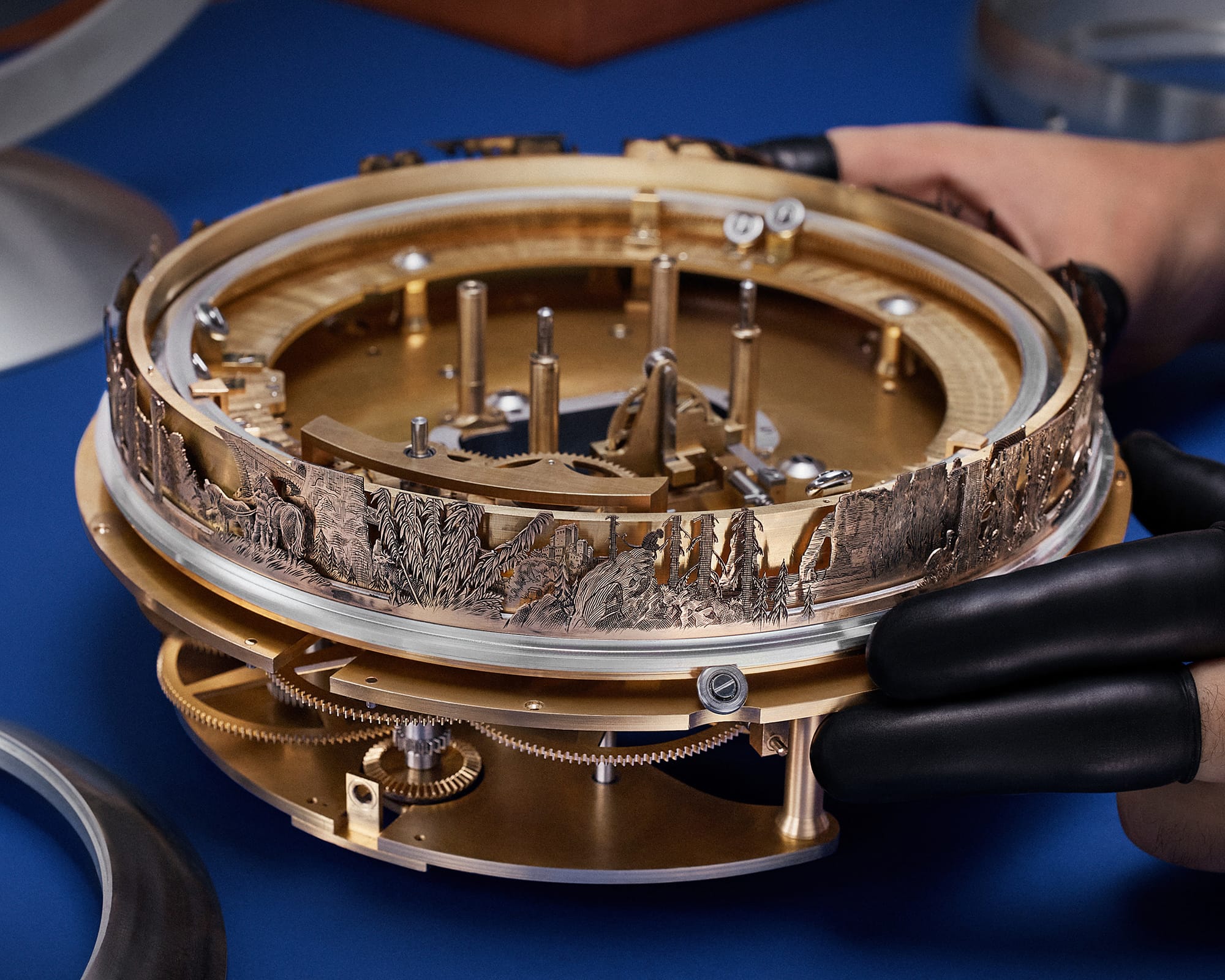
The standalone watch is priced at €375,000. The clock-and-watch set lands at €4,000,000, a figure that reflects not extravagance so much as commitment.
The sympathetic clock itself isn’t a new idea. It goes back to the late 18th century and figures like Antide Janvier and Abraham-Louis Breguet. What’s unusual here is who’s reviving it and how seriously it’s being treated. Denis Flageollet worked on sympathetic clocks in the early 1990s at T.H.A., long before De Bethune existed, so this isn’t a history lesson or a tribute piece.
With Louis Vuitton involved, the idea gets the resources and patience it actually requires. No compromises, no shortcuts, no need to make it palatable. The result isn’t about nostalgia or flexing complexity for its own sake. It’s simply a fully realized answer to a problem most brands stopped trying to solve decades ago.