
MB&F Doesn’t Do “Polite” Watchmaking
Watchmaking has learned how to behave. MB&F never did.
In an industry that rewards restraint, symmetry, and good manners, MB&F has spent the last two decades doing the opposite. Its watches are loud without being flashy, complex without being academic, and emotional in a space that often mistakes politeness for taste. They are machines first, statements second, and products only as a technicality.
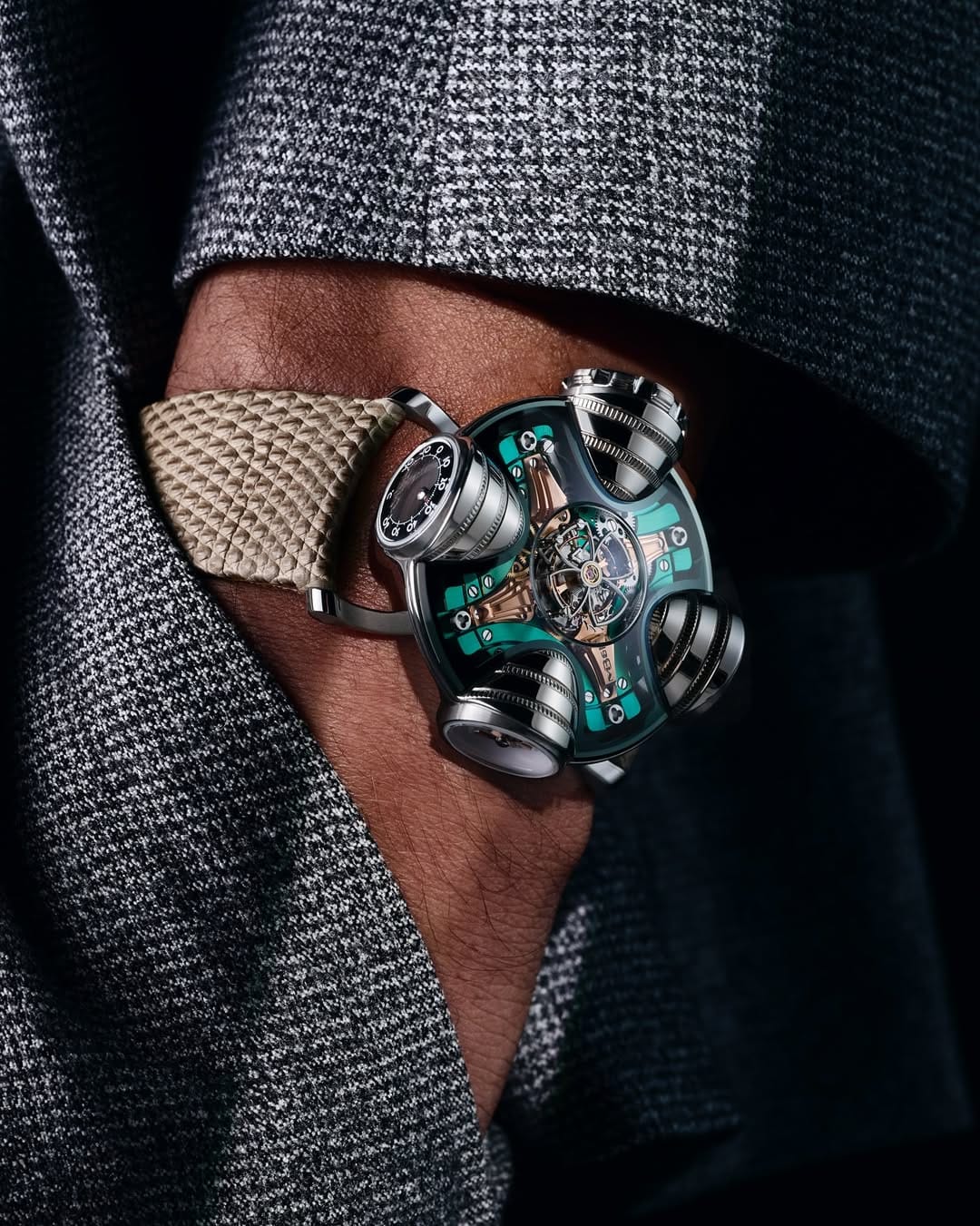
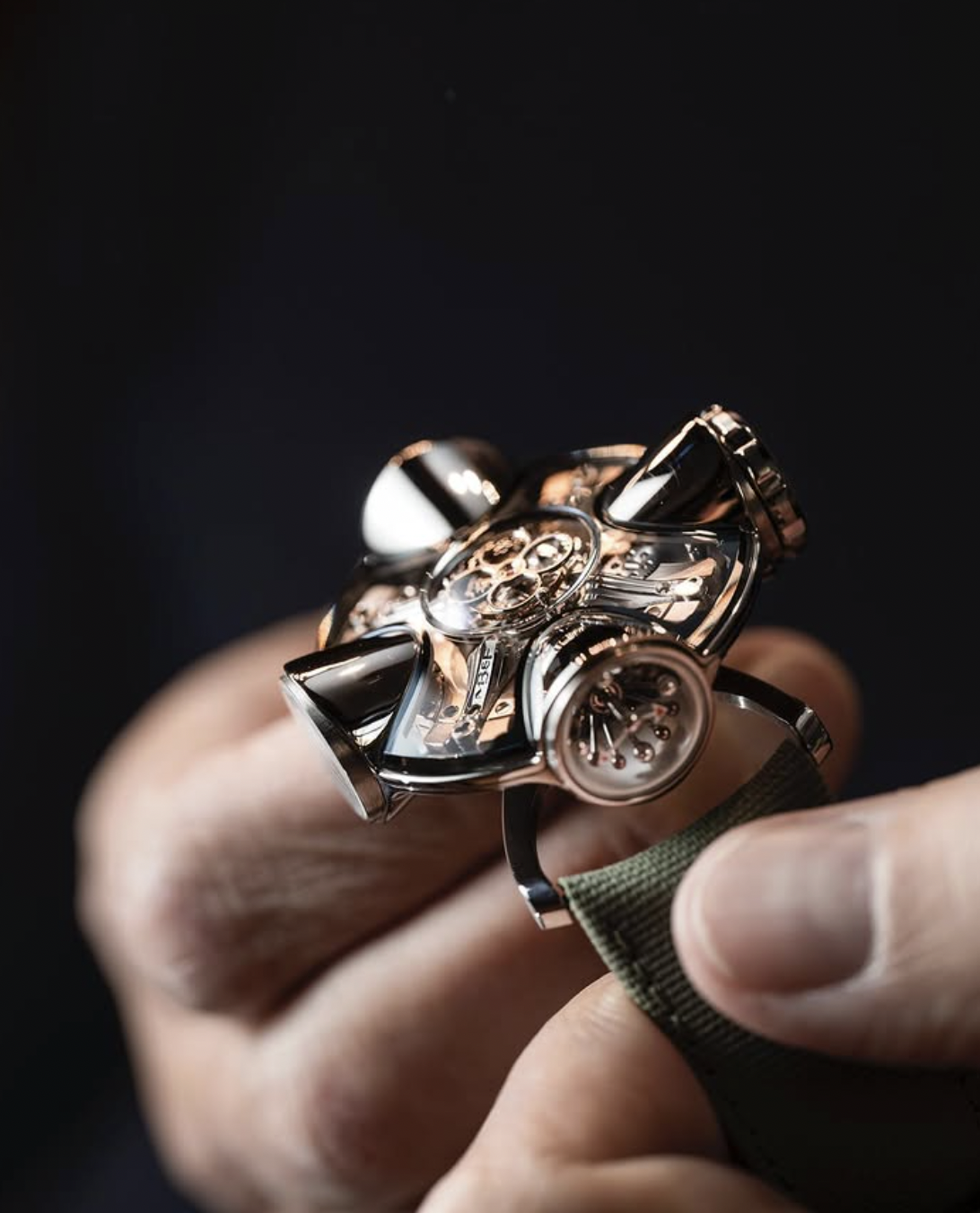
Founded in 2005 by Maximilian Büsser after stints at Jaeger-LeCoultre and Harry Winston, MB&F was never meant to function like a normal watch brand. Büsser didn’t want to refine tradition. He wanted to break it open. That impulse became MB&F, short for Maximilian Büsser & Friends, a name that reflects how the brand actually operates. Not as a hierarchy, but as a rotating cast of independent watchmakers, designers, and engineers building ideas that would never survive a conventional boardroom.

The earliest Horological Machines made that philosophy impossible to miss. Pieces like the HM1 and later the HM4 Thunderbolt rejected the idea of a discreet wristwatch altogether, replacing it with sculptural cases, exposed movements, and designs inspired by aviation, science fiction, animals, and architecture. The HM10 Bulldog went further, turning the watch into a mechanical character, complete with domed sapphire eyes and a power reserve indicator that literally opens and closes its mouth. These were not watches trying to impress quietly. They wanted interaction. They wanted reaction.
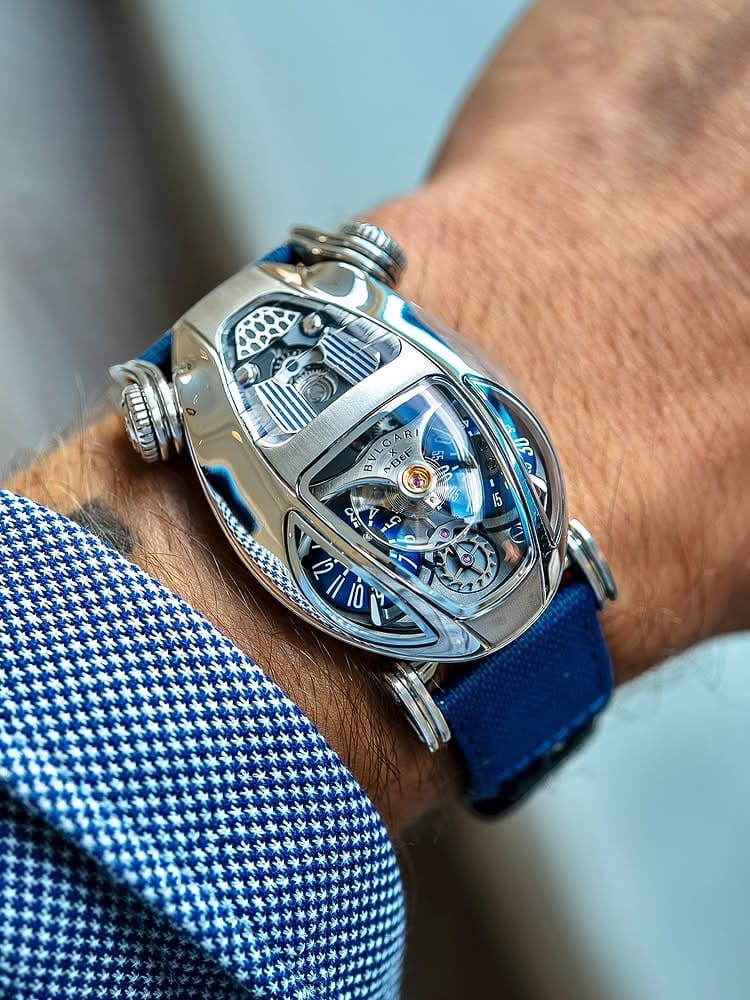
Even when MB&F looks backward, it refuses to be polite about it. The Legacy Machine collection, launched in 2011, takes nineteenth-century watchmaking and rebuilds it in three dimensions. Floating balance wheels hover above the dial. Subdials are suspended like instruments rather than printed conveniences. Collaborations with watchmaker Stephen McDonnell resulted in movements like the LM Perpetual, a perpetual calendar designed to be intuitive and mechanically safe, and the LM Sequential Flyback, a chronograph so complex it borders on excessive. Classical, maybe. Restrained, never.
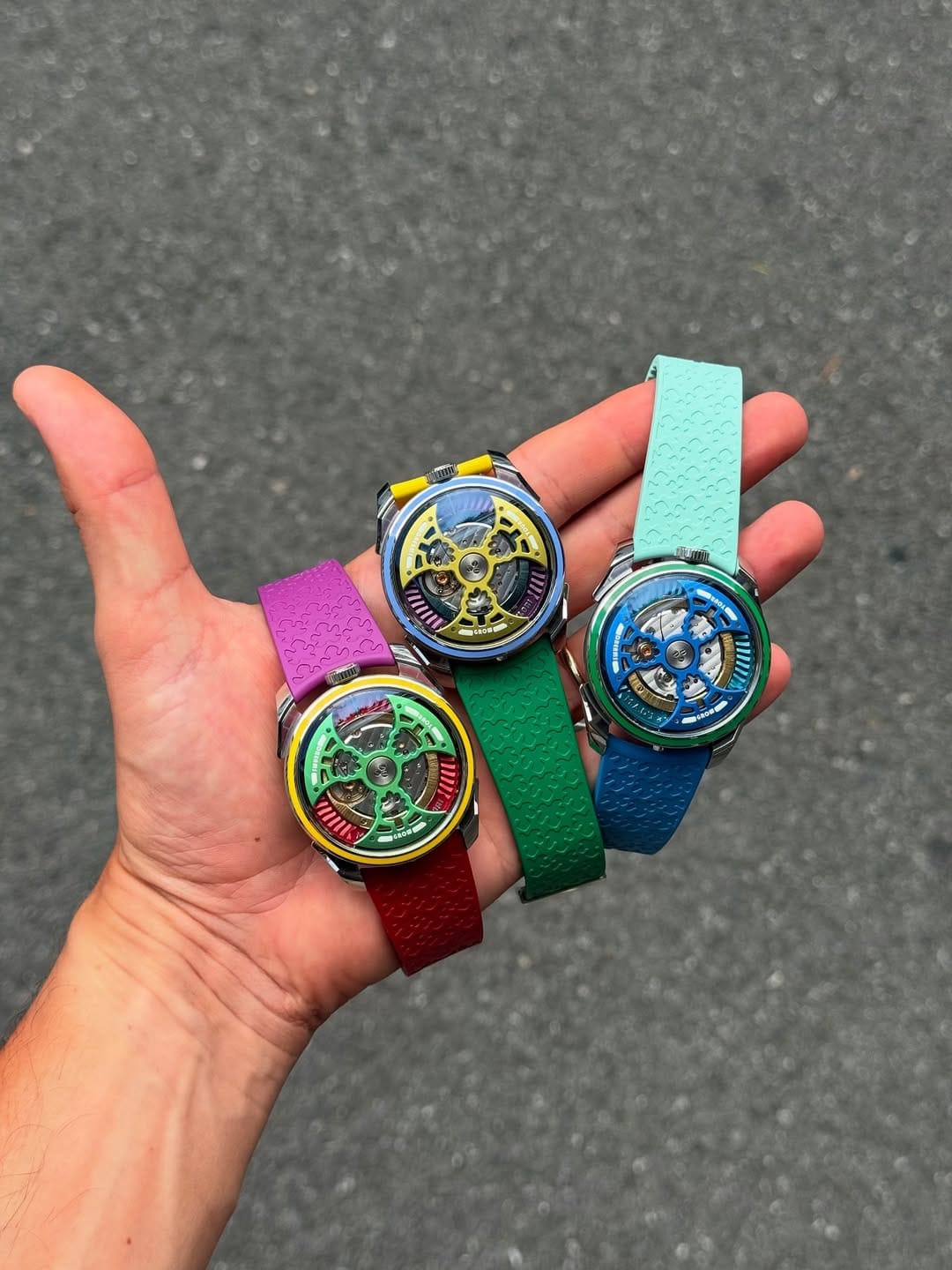
That refusal to behave carries through everything MB&F touches. The brand’s Performance Art collaborations, its clocks made with L’Epée, and its more accessible M.A.D. Editions watches all share the same core belief: watchmaking should feel alive. The M.A.D.1 and M.A.D.2 didn’t just reinterpret the watch. They turned it into a spinning object, a DJ deck, a kinetic toy for the wrist.
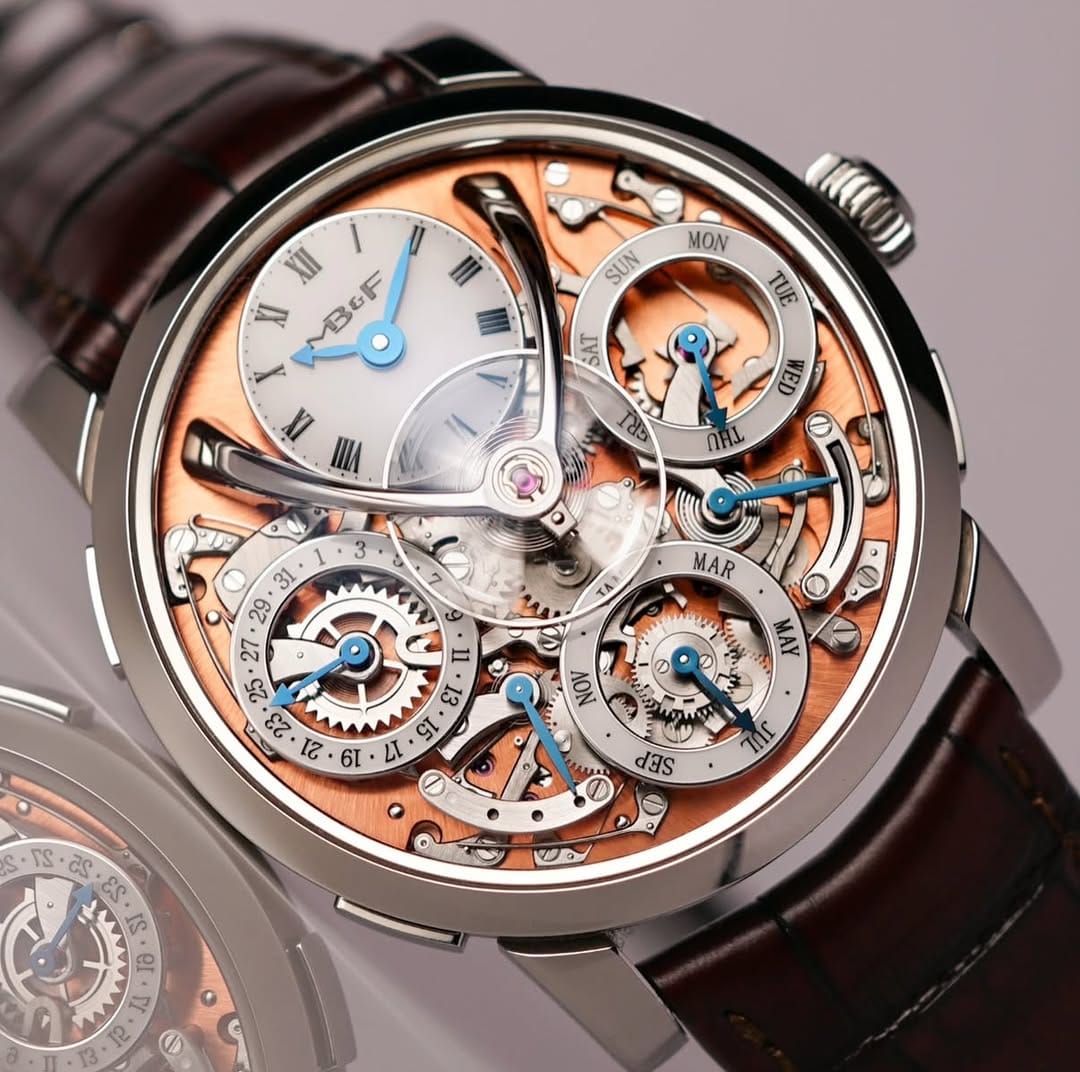
At a time when much of luxury watchmaking is sanding itself smooth, MB&F keeps its edges sharp on purpose. These are not watches designed to disappear under a cuff or signal good taste quietly. They are built to challenge expectations, start conversations, and remind the wearer that horology can still feel strange, joyful, and slightly uncomfortable.
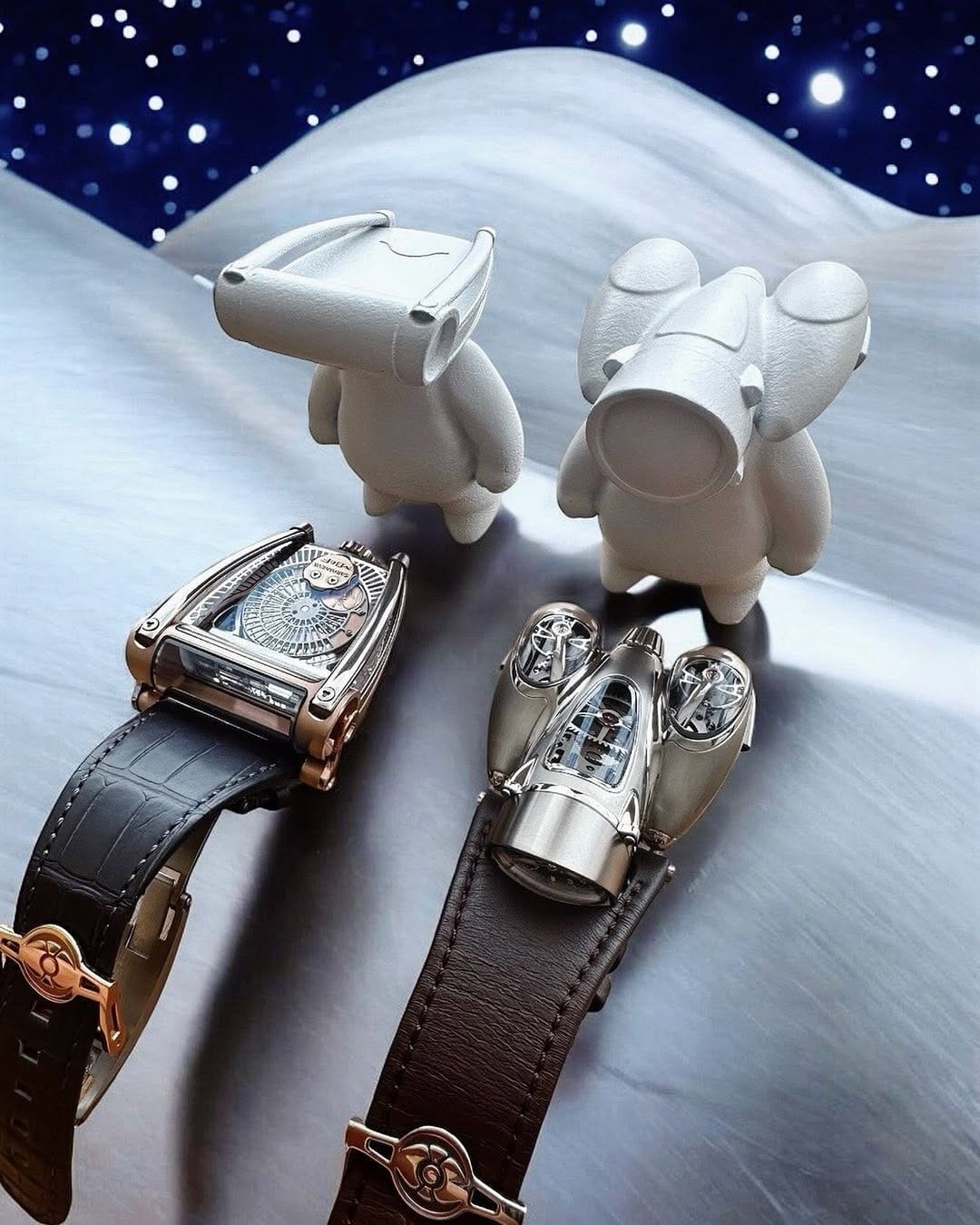
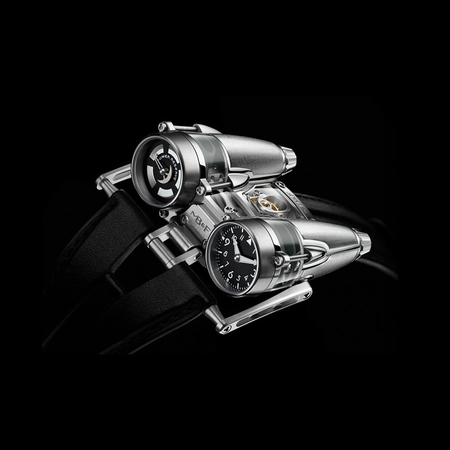
MB&F doesn’t do polite watchmaking because politeness has never moved the craft forward. And after twenty years, it’s clear the brand was never interested in fitting in. It was interested in seeing how far watchmaking could be pushed before it stopped being a watch at all.