Lands Abroad: Paul Anthony Smith on Nostalgia, Power, and the Price of Entry
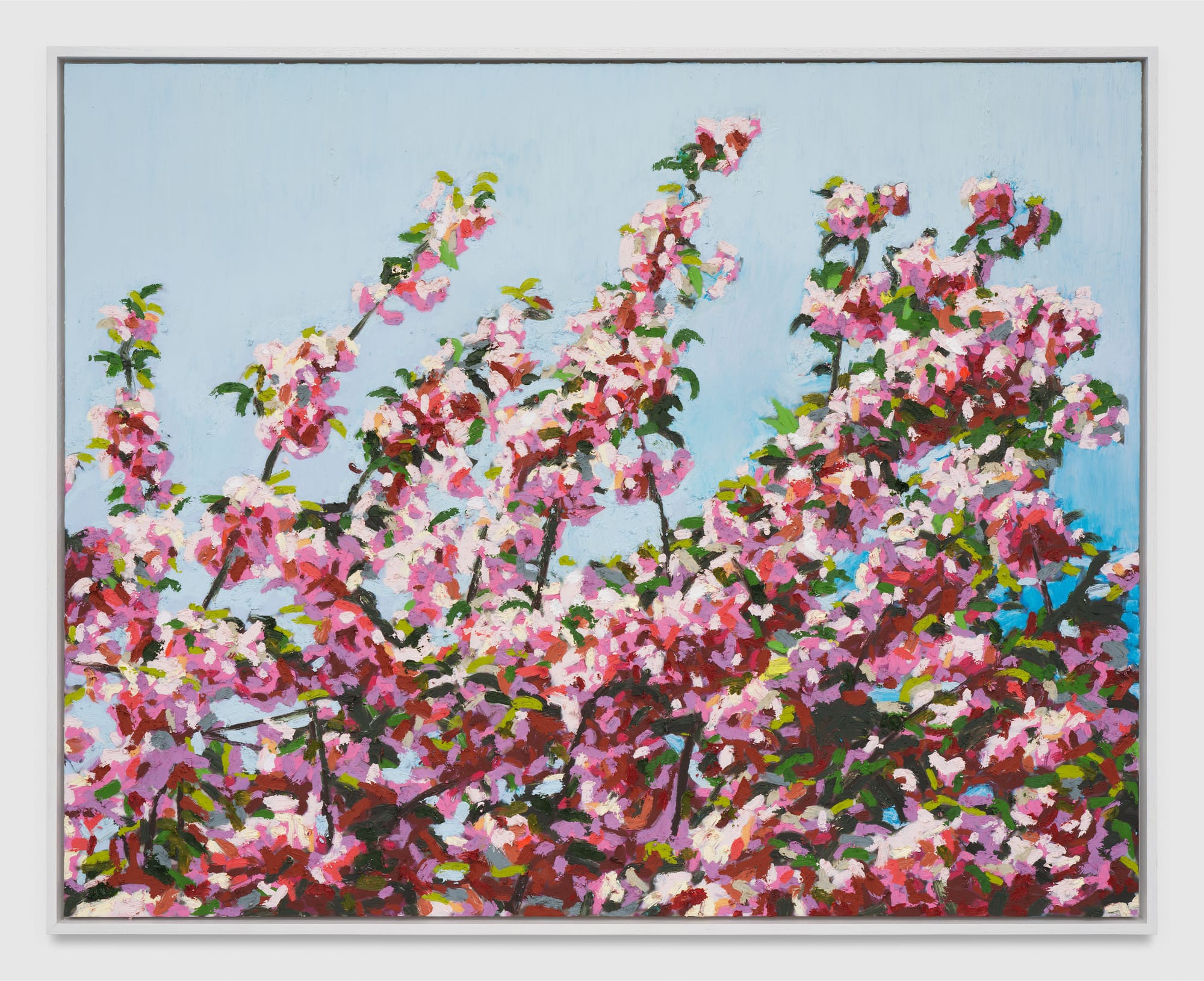
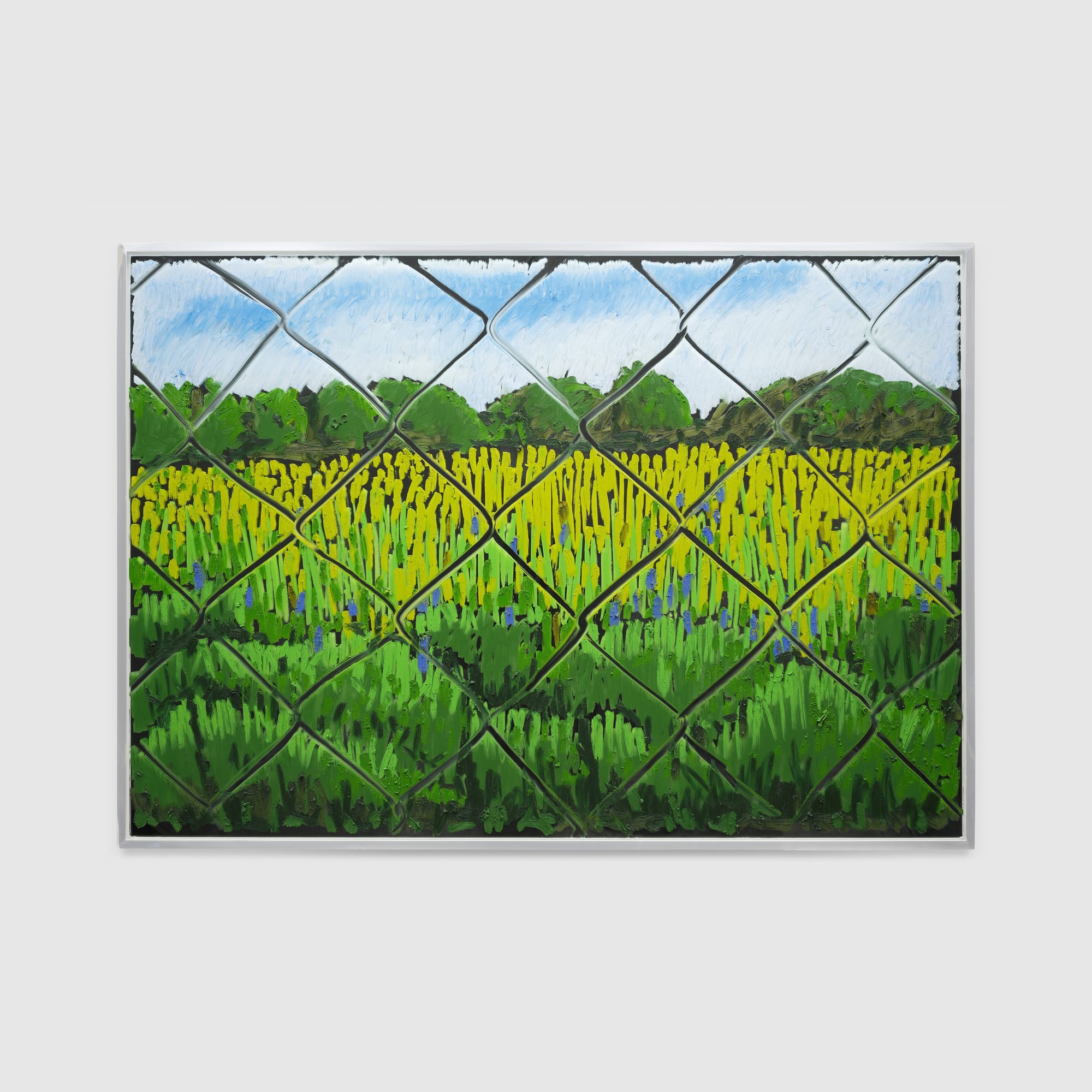
In his 1951 poem Harlem, Langston Hughes asks, “What happens to a dream deferred?” New York–based painter Paul Anthony Smith titled a series of works after that question, inspired by idyllic, lush gardens fenced in to keep gawkers and would-be wanderers out.
The works ask viewers to consider who has access to bucolic spaces and who is left outside the gates. Part of the series, which originally debuted at Timothy Taylor’s stand at Frieze London in October 2024, is currently on view in Lands Abroad through February 28 at Timothy Taylor in London.
Dreams Deferred is one of two bodies of work presented in Lands Abroad, Smith’s debut solo exhibition with the gallery.
Smith, who was born in Saint Ann’s Bay, Jamaica, and lived there until he was nine, is no stranger to feeling like an outsider. Growing up, he straddled his upbringing in Jamaica and his new life in the United States.
He followed his father, who worked on cruise ships, to Florida. During his formative years, he lived with his father, stepmother, and four stepsiblings, while his father was often away at sea. His family belonged to the conservative Seventh-day Adventist Church.
Smith found inspiration in the writings of Jamaican-British sociologist and cultural theorist Stuart Hall, who believed identity is in constant evolution, shaped as much by the past as by the present and future. Hall argued that representation, discourse, and power actively construct identity.
Like Hall, Smith examines his own identity through memory and lived experience, while also finding meaning in place and environment, in systems of inclusion and exclusion.
In the Dreams Deferred series, he turns to gardens ranging from the Palace of Versailles and Central Park to community plots along highways.
The paintings are often rendered from a vantage point behind a chain-link fence, prompting viewers to question whether they belong in the scene or whether the barrier exists to keep them out.
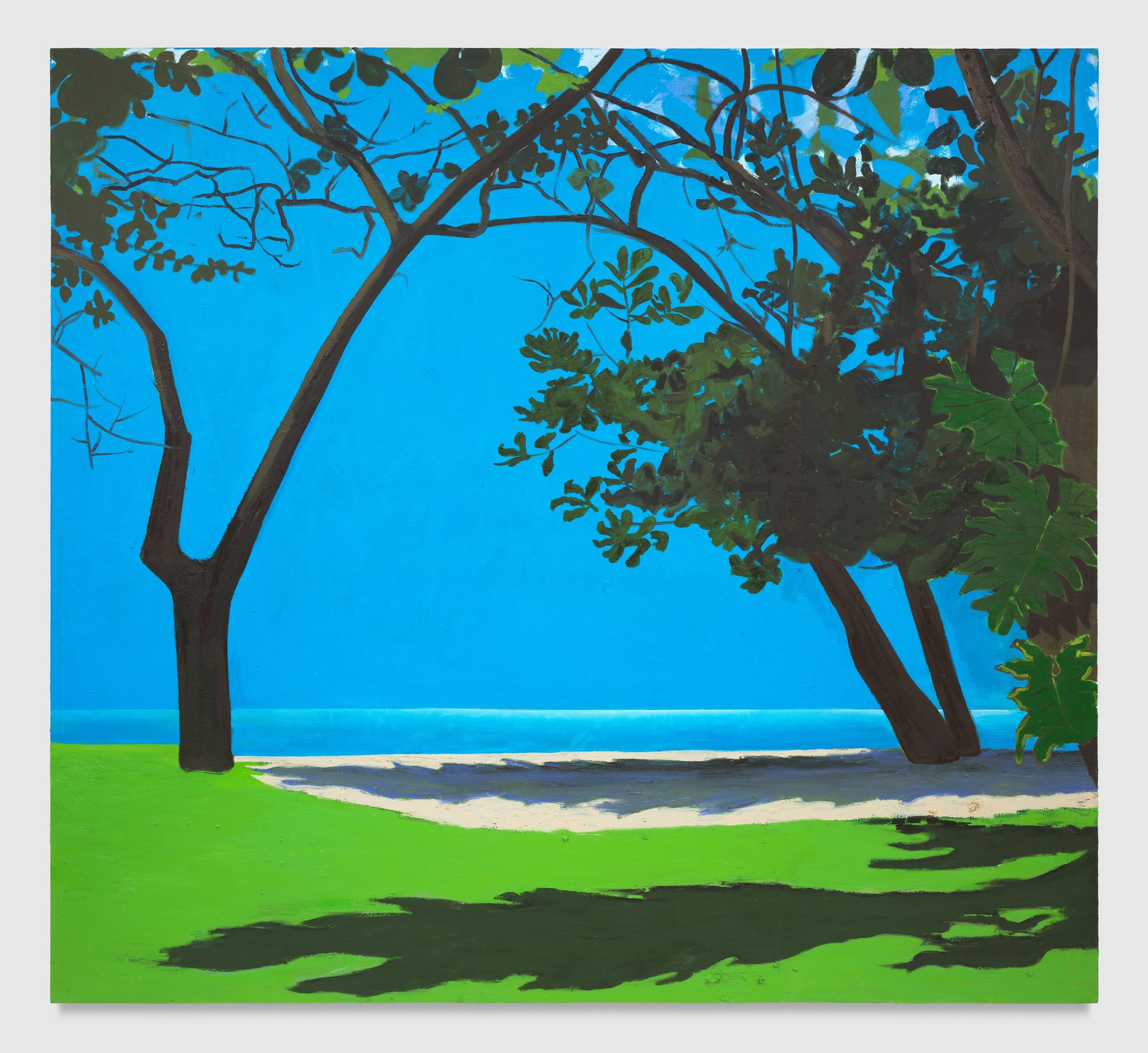
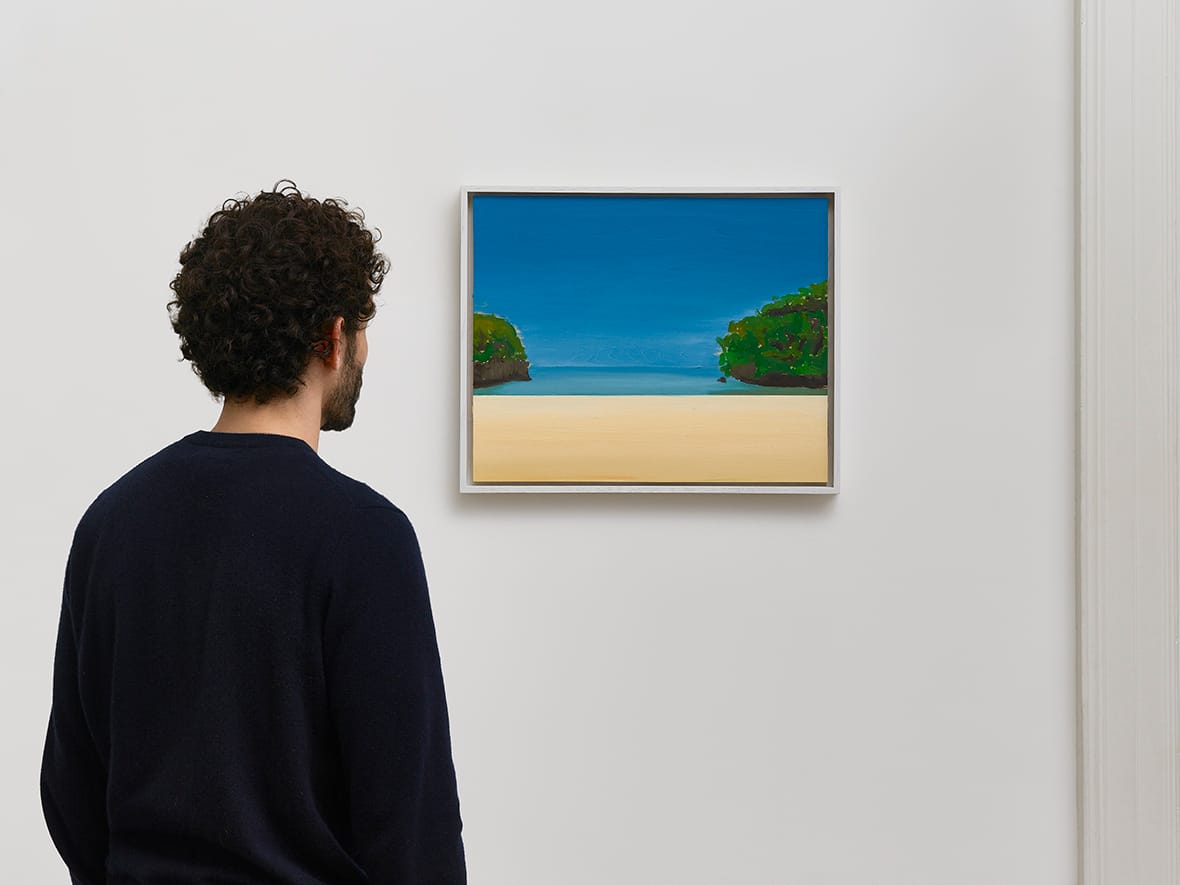
In the new Jamaica Paintings, Smith returns to his ancestral homeland, focusing on Frenchman’s Cove on the island’s northeastern coast.
Clear turquoise waters, powdery sand, and dense foliage fill the compositions, depicted from shifting perspectives within the secluded cove. These works evoke longing and nostalgia, while also confronting the present and gesturing toward the future.
Through Lands Abroad, Smith transforms gardens and natural landscapes into meditations on identity, history, and belonging.