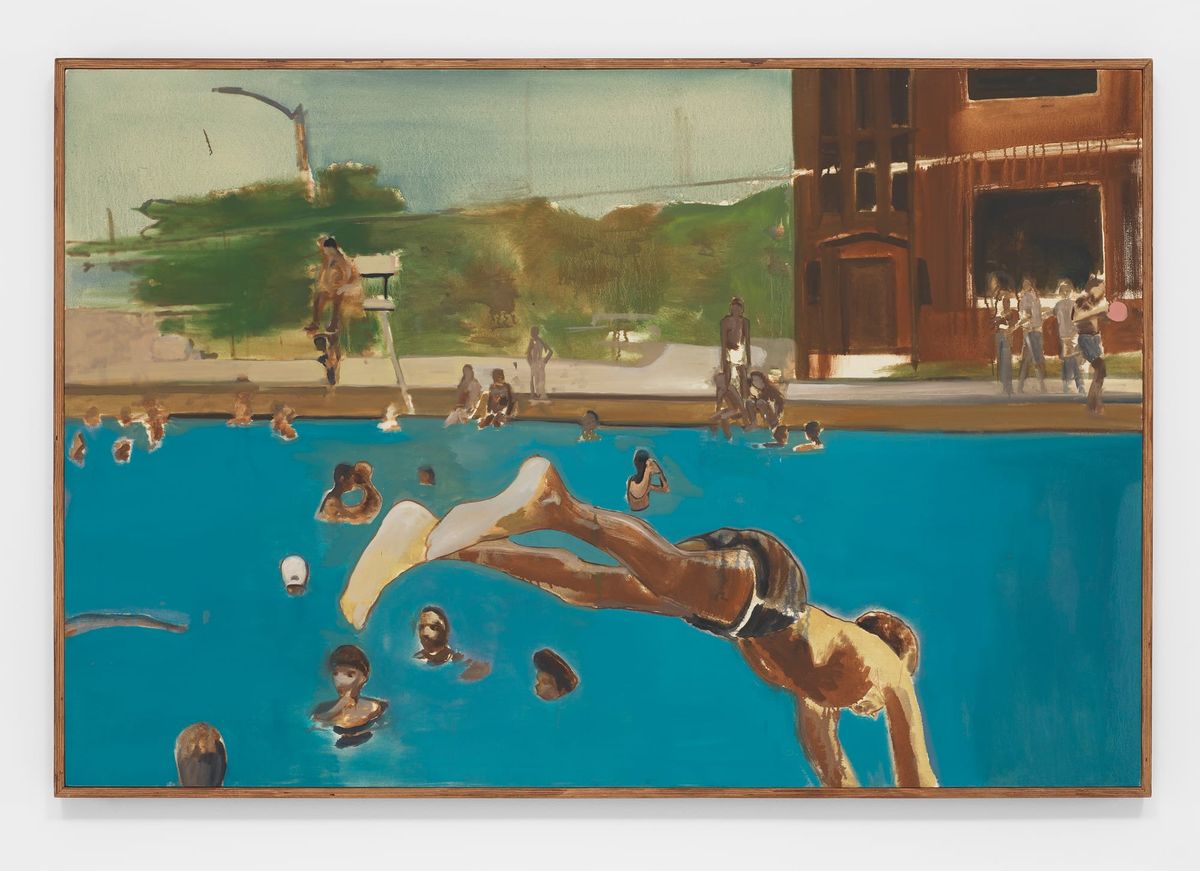
Noah Davis Painted Like He Knew He Was Running Out of Time
Noah Davis painted like he had something urgent to say—which, it turns out, he did. The Philadelphia Art Museum's new survey of his work, on view through April 26, brings together more than 60 paintings, sculptures, and works on paper by an artist who died in 2015 at 32. If you've never heard of him, that's partly the point. Davis spent his short career making work for people who'd been left out of the conversation entirely.
Davis was born in Seattle in 1983, and briefly studied at Cooper Union in New York—the prestigious art school that has produced everyone from Eva Hesse to Felix Gonzalez-Torres—then dropped out and moved to Los Angeles, where he got a job at an art bookshop and basically self-educated his way into one of the most distinctive painting practices of his generation.
His influences were sprawling and unapologetically omnivorous: Caspar David Friedrich's moody German Romanticism, the Color Field abstractions of Mark Rothko, the figurative work of Romare Bearden and Kerry James Marshall, two Black American painters whose legacies loom large over contemporary art. Davis absorbed all of it, metabolized it, and made something entirely his own.
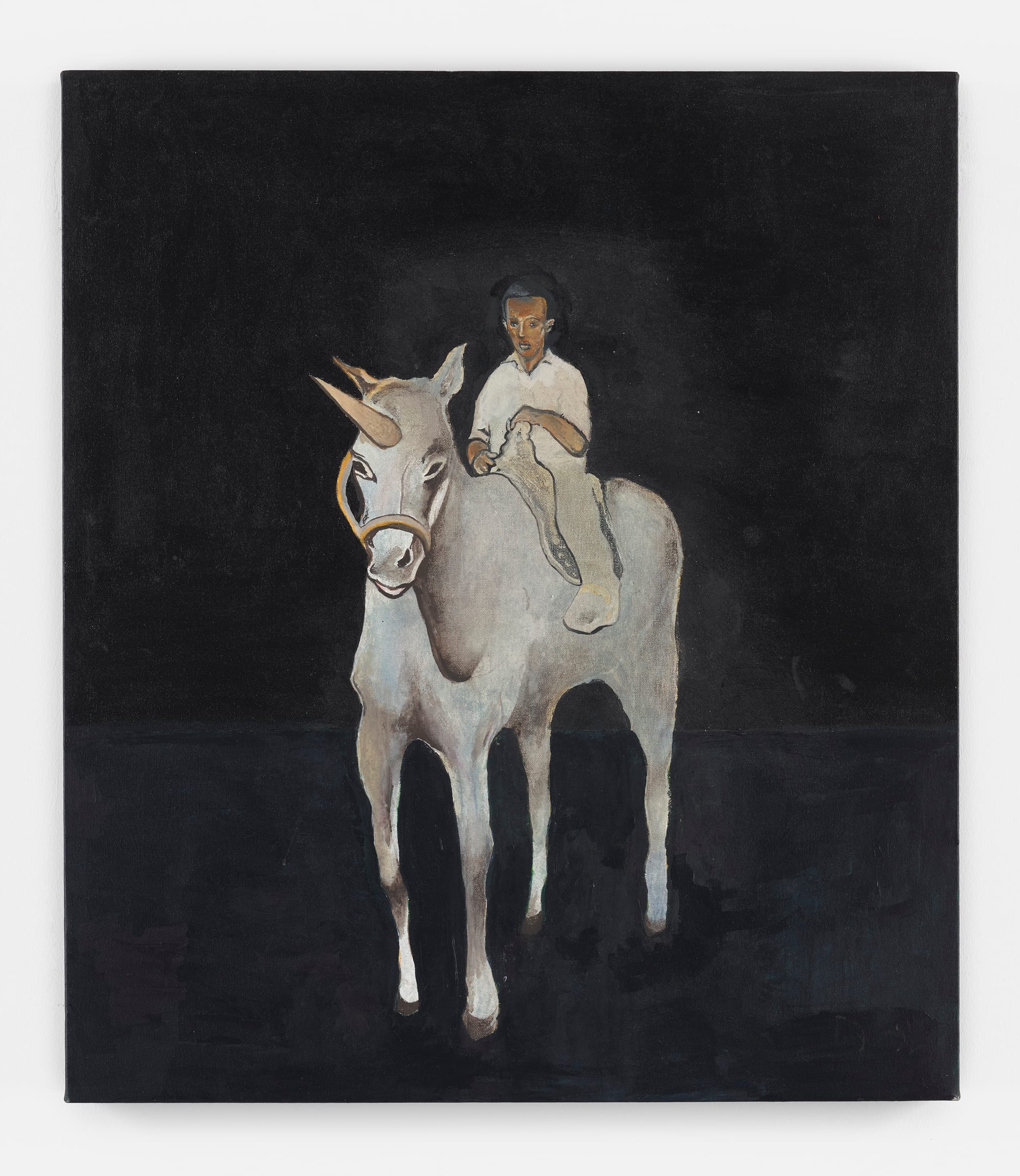
What that looks like, in practice, is painting that doesn't behave. His canvases slip between styles mid-composition—realist here, nearly abstract there—and refuse to settle into any single mood. 40 Acres and a Unicorn (2007), one of the show's earliest works, depicts a Black figure astride a white unicorn against a pitch-black ground. It's funny and mournful at the same time, which is a very hard thing to pull off. The title is a direct reference to the Reconstruction-era promise of land and economic autonomy made to formerly enslaved people after the Civil War—a promise that was almost immediately broken. Davis takes that history and tilts it sideways, into something that feels more like a dream than a lesson.
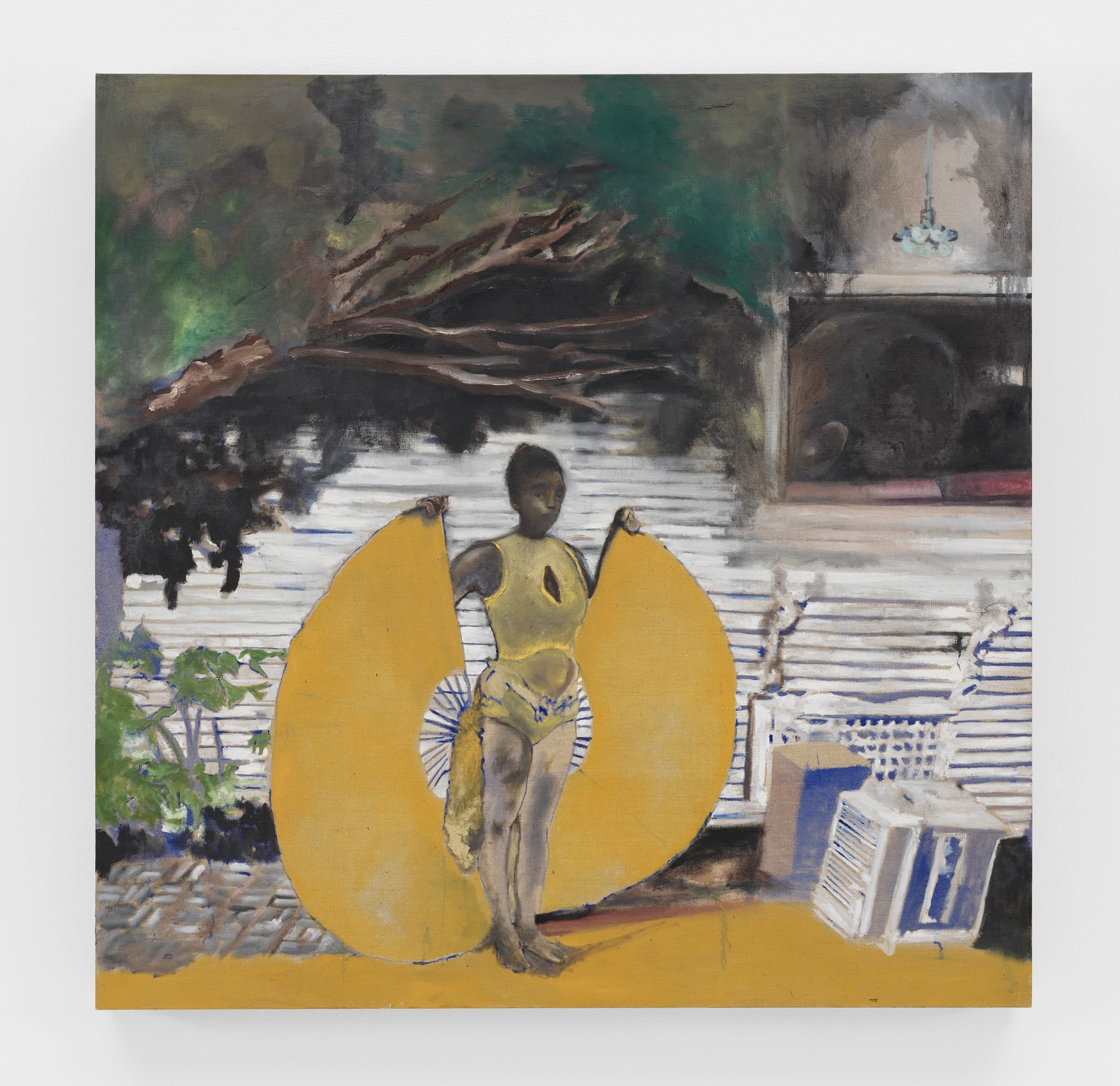
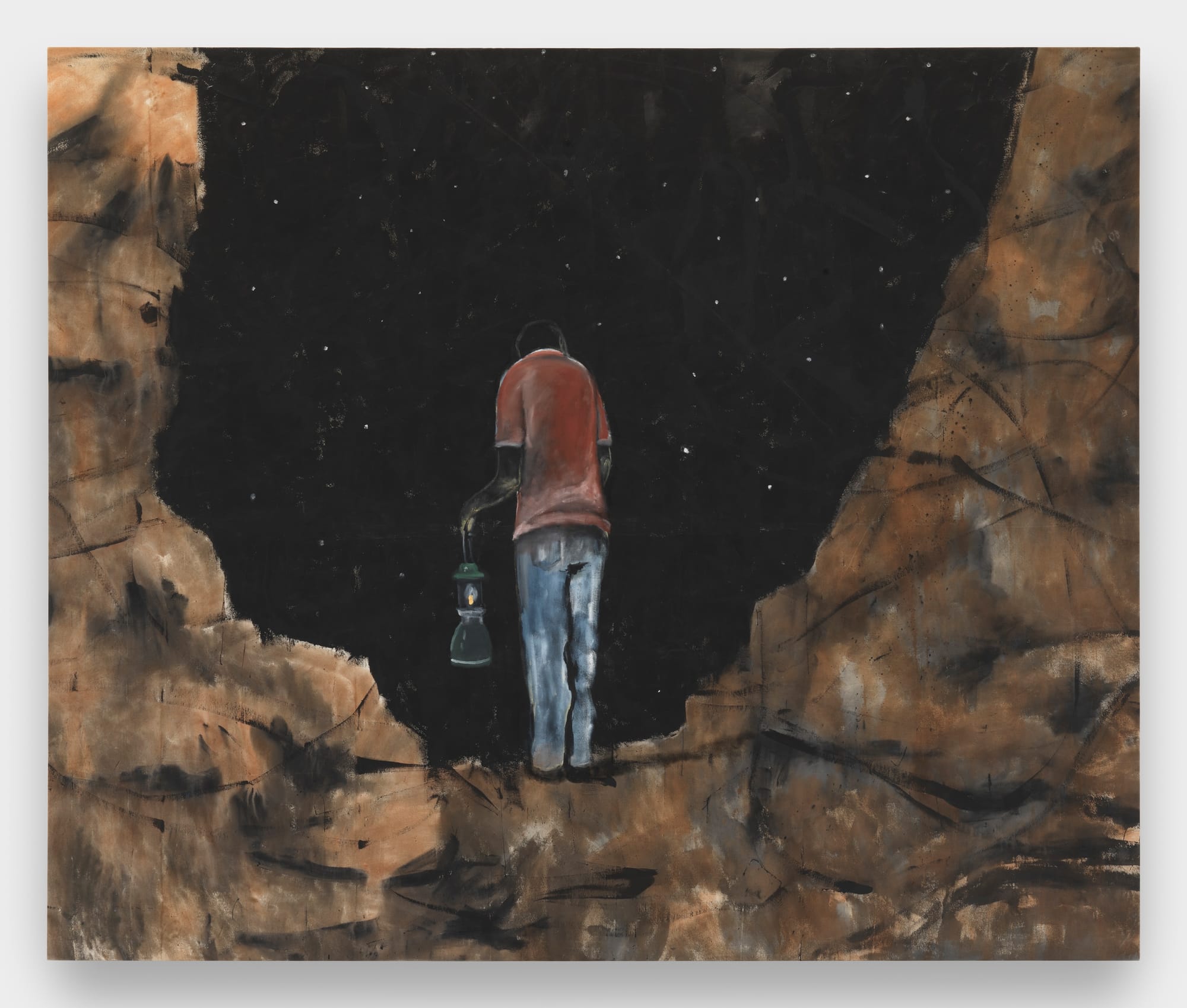
Isis (2009) portrays his wife, the artist Karon Davis, as the Egyptian goddess—part portrait, part mythology, rendered with a golden radiance that makes the whole thing feel like an icon in the religious sense of the word. Painting for My Dad (2011) shows a lone figure standing at the mouth of a cave, lantern in hand, with an ink-dark sky overhead. The emotional register is unmistakable, even if you don't know the backstory. The Pueblo del Rio series (2014), among his last major bodies of work, depicts one of LA's oldest public housing developments with the same quiet reverence usually reserved for cathedrals. Davis saw grandeur where institutional America saw a problem to be managed.
The subjects he returned to, again and again, were the textures of Black life in all their specificity—family, politics, architecture, daytime television, mythology—but he resisted anything that flattened that specificity into symbol or easy statement. His figures exist in their own time, their own weather, their own interiority. You feel like you've interrupted something. Whether that something is grief or joy or just an ordinary Tuesday afternoon is rarely obvious, which is exactly the point.
Davis was also, crucially, an institution-builder. In 2012, he and Karon co-founded the Underground Museum in Arlington Heights, a historically Black and Latinx neighborhood in Los Angeles, because he believed access to art shouldn't be contingent on proximity to a downtown zip code or the cost of a museum ticket. They took four storefronts, converted them into a free cultural center, and planted purple flowers in the parking lot—a detail that tells you everything about the kind of place they were trying to make.
Eventually they brokered a partnership with MOCA, the Museum of Contemporary Art, to borrow works from their permanent collection, so that people who couldn't or wouldn't make the trip to Wilshire Boulevard could see Basquiat and Kara Walker in their own neighborhood. Before he died, Davis had planned 18 exhibitions for the Underground Museum using MOCA's holdings. Most of them never happened.
The Philadelphia show is the final stop on an international tour that began at DAS MINSK in Potsdam and traveled through the Barbican in London and the Hammer Museum in Los Angeles.
It's the largest survey of Davis's work to date, and it arrives at a moment when questions about who art is for—who gets to make it, who gets to see it, who gets remembered—feel newly urgent. The catalog alone, published by Prestel with essays by poets, critics, and artists including Claudia Rankine and Dawoud Bey, reads like a small cultural event.
Davis's answer to all of those questions, at least the one he actually lived, was that art should be for everyone. He just didn't wait for institutions to figure that out on their own.
Noah Davis is on view at the Philadelphia Art Museum through April 26, 2026.